

NBRPA TO BRING ACCLAIMED HEALTH SCREENING PROGRAM TO NCAA WOMEN’S FINAL FOUR FOR FIRST TIME

First-Ever Event to Focus on Women’s Health And Include Breast Cancer Examinations for WNBA Legends

CHICAGO, Illinois, (March 13, 2023) - The National Basketball Retired Players Association (NBRPA), today announced that, for the first time ever, their Health Screening Program will be conducted during the NCAA Women’s Final Four event in Dallas, Texas. In addition to the customary, wide-ranging screening procedures, the NBRPA’s program will also launch innovative breast cancer examinations utilizing the latest technology from Bexa for WNBA Legends taking part in the program.  Breast exams that include Bexa provide a highly convenient early detection option for all women including younger women who want the opportunity to protect themselves. By providing expanded choices, the NBRPA is committed to ensure that all members have an opportunity to choose an early detection option that’s right for them.

The critically acclaimed program, under the supervision of the NBRPA Chief Medical Director Joe Rogowski, will focus on women’s health, deliver thorough, cost-effective, healthcare to its membership and address many of the medical issues experienced by the NBRPA population, while also educating them on proactive measures that promote a healthy lifestyle.

“We are thrilled at the opportunity to grow our Health Screening Program and to be able to increase our focus on health issues affecting women.” said Scott Rochelle, President & CEO, NBRPA.  “With the world of women’s basketball front and center in Dallas, this presents an incredible occasion to bring this impactful program to where so many of our members will be.”

Launched in conjunction with the NBPA in 2016, to deliver valuable, preventive long-term healthcare check-ups to former professional players across the U.S., the Health Screening Program has impacted hundreds of former players by providing preventative testing, including blood work, electrocardiograms, echocardiograms and cardiology consultations.

The NBRPA announced in 2022 that they would begin overseeing the program and brought along Joe Rogowski to head the operation. Rogowski, who served as the NBPA’s Chief Medical Officer for the past decade, was named the NBRPA’s Chief Medical Director in November 2022.

About the National Basketball Retired Players Association
The National Basketball Retired Players Association (NBRPA) is comprised of former professional basketball players from the NBA, ABA, and WNBA. It is a 501(c) 3 organization with a mission to develop, implement and advocate a wide array of programs to benefit its members, supporters and the community. The NBRPA was founded in 1992 by basketball legends Dave DeBusschere, Dave Bing, Archie Clark, Dave Cowens and Oscar Robertson. The NBRPA works in direct partnerships with the NBA and the National Basketball Players Association. Legends Care is the charitable initiative of the NBRPA that positively impacts youth and communities through basketball. Scott Rochelle is President and CEO, and the NBRPA Board of Directors includes Chairman of the Board Johnny Davis, Treasurer Sam Perkins, Secretary Grant Hill, Nancy Lieberman, CJ Kupec, Mike Bantom, Caron Butler, Jerome Williams, Shawn Marion, Charles “Choo” Smith and Robert Horry. Learn more at legendsofbasketball.com

To follow along with the NBRPA, find them on social media at @NBAalumni on Twitter, Instagram, YouTube and Twitch. 

###

Media Contacts:

Julio Manteiga, NBRPA, (516) 749-9894, jmanteiga@legendsofbasketball.com
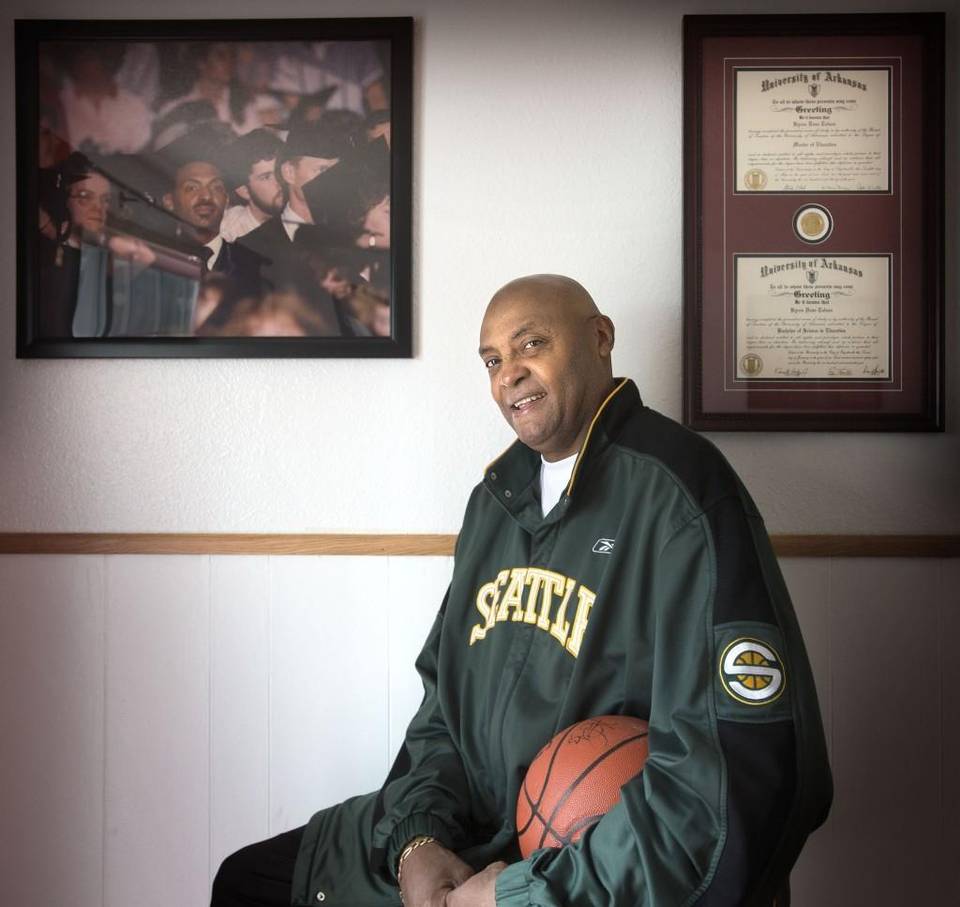
Dean Tolson

The National Basketball Retired Players Association’s (NBRPA) history is filled with inspirational stories from our Legends.  Whether its stories of surviving humble beginnings and reaching the highest pinnacles the sport of basketball has to offer, or a member going the extra mile to aid their communities or mentoring the youth of the world – there is no shortage of stories that transcend the sport and show the resolve and fortitude our members display in trying to make the world a better place. 

One such member is Dean Tolson.  Dean was selected by the Seattle SuperSonics in the 5th round (8th pick, 80th overall) of the 1974 NBA draft, and was also selected in the 7th round of the 1974 American Basketball Association Draft (ABA) by the New York Nets. He was the first player to be drafted by both leagues simultaneously.  While only playing three seasons for the SuperSonics, and appearing in 80 games over his career, he did manage to play eleven years internationally.  A versatile and dynamic scorer in his collegiate (Univ. of Arkansas) career, Dean’s legacy is not his accomplishments on the court, but rather what he’s done to overcome a severe detriment that plagues many worldwide.  Dean was illiterate for most of his life and through sheer force and determination he returned to school and now holds a B.S.Ed. (BS of Secondary Ed) and M.Ed. (Masters of  Ed) from the University of Arkansas, and is a member of the National Honors Society.

We recently caught up with Dean for a chat, where he recounted his personal journey and struggles with illiteracy, detailed his overcoming great odds to become a professional basketball player and shared his mission to be an advocate for the importance of education.  

Q: Very early in life you were able to meet one of the greatest players of all time in Wilt Chamberlain.  How did that come about?

Dean Tolson: “My aunt dated Wilt when he was at Kansas University, and on the weekends, she would sometimes bring Wilt by her house and occasionally our house.  So, when Wilt came through the door, me - as young boy, I was like ‘Oh my god.’  I was very young when I met him – around 5 yrs old, so I didn’t understand the whole scope of it, but when I was 8 – I started to realize the significance and that’s when I realized I wanted to play in the NBA.  I remember watching Chamberlain and Bill Russell battle.”

Q: So, you mention the late, great Bill Russell.  Later on, in life as you are coming out of the University of Arkansas – it’s actually Bill Russell that drafted you to the Seattle Supersonics.   

Dean Tolson: “Correct.”  He not only drafted me but he coached me.”  

Q: I’d like to discuss your early life.  Your family had some difficulties in raising you when you were a young boy and your were placed in an orphanage.  Could you tell us about that?

Dean Tolson: “Oh man, you can’t even imagine. It was 300 kids in a Missouri state sponsored orphanage home, and they were all as bad as hell.”  

Q: Part of the difficulty at this orphanage home is that you are not getting the educational support a child needs at this time in their life.  Are you going to school at this juncture?  Are you attending classes?

Dean Tolson: “I was going to the school but skipping classes and all that.  It was all very negligent on the part of the educational system.  Because I was of such big stature and had some size, the schools let me get away with this stuff.  This is not a new phenomenon – there are three notable athletes that this has happened to – me, former NFL player Dexter Manley and tennis great Arthur Ashe.  What I’m thinking throughout the entire process of me going to school, and not receiving an education is that no one cares.  To me it seemed that since I could play ball, that was the only thing anyone was interested in and not necessarily my education or growth as a person.  You show up to practice, show up to the games, you win the game and everybody loves you, but no one cares what happens after that.”

Q: Now while at the University of Arkansas, you also get drafted by the U.S. Army Reserve.  How did you manage that?

Dean Tolson: “I’ll tell you – I went AWOL three times while I was in the Army Reserve.  Actually, I finished my Reserve training, and the Army told me that I was actually too tall to serve and received an honorable discharge and a 100% pay scale.”  

Q: So, after you play a game or go to practice, when you go back into everyday life, what kind of struggle is there for you in dealing with this issue of not being able to read or write?

Dean Tolson: “I could not articulate anything at all.  I would go through life and fake it.  I would act like I knew what you were saying or what was being read – when in actuality I did not.”

Q: At what point does the lightbulb come on for you and your realize you need to fix this situation with your reading and writing?

Dean Tolson: “My mother urged me to go back to school and with the help of Arkansas’ Frank Broyles.  The hardest part for me was disciplining myself to buckle down and get the school work done.  I wanted to show the world that anyone can do this.  

Q: When you finally complete your education and achieve a Master’s Degree, what goes through your head?

Dean Tolson: that I competed the greatest comeback in sports, and educational history.  I want to show these kids out here that they can graduate high school and college.”

Q: If you had to dole out advice to aspiring student-athletes what would that lasting legacy piece of advice be?

Dean Tolson: “You have to develop two sides of your personality to succeed.  You have to understand that you are a student-athlete – I was an athlete – no student.  If you really want to pursue this dream and you really love the game, you have to do both because you can’t have one without the other.”

Dean Tolson has a book coming out in the Fall of 2023 titled “Power Forward: My Journey from Illiterate NBA Player to a Magna Cum Laude Master's Degree.”  For more information on Dean’s book please visit - https://a.co/d/aLrBYPi and for information on Dean please visit - https://www.deantolson.com/about-dean-tolson/