

Developed under the direction and sponsorship of Novartis Pharmaceuticals Corporation.


Be the First to Learn
About High Lp(a)*†

Understanding a common but often overlooked heart health risk factor
Heart disease continues to be a common health challenge for many Americans, and it’s all too familiar in the Black community. In fact, many Black people may see it as a part of life—something that’s bound to happen. But it doesn’t have to. If you or someone in your family has had an early heart attack or stroke,‡ it’s important to explore a potential hidden risk like high Lp(a), known as Lipoprotein (a) or “L-P-little a."
Learning about lipoprotein (a) can help people better understand their personal and family heart health
history, especially when there is a history of early heart attack or stroke.
*Lp(a): L-P-little a, Lipoprotein (a).
†If Lp(a) is 125 nmol/L (50 mg/dL) or higher, this indicates a high level.
‡For men, this means before age 55, and for women, before age 65
Be the First to Learn—Stay Informed About
Lipoprotein (a)
Lipoprotein (a) is not part of standard cholesterol testing, and people may first learn about it after a heart-related event in the family.
Staying informed can help encourage earlier conversations, better questions, and shared understanding—for yourself and for those closest to you.
Be the First to Learn About Lipoprotein (a)
Sign up to receive updates, resources, and tools about lipoprotein (a).
Why Testing Matters

What is Lipoprotein (a)?
Lipoprotein (a) is in your blood and is made of fat and protein. Your Lp(a) level is set by about age 5 and remains mostly the same for life. Lp(a) is “sticky” and having too much of it in your blood can clog arteries, raising the risk of heart attack and stroke, including earlier in life. About 1 in 5 Americans inherit high Lp(a), and it’s even more common in Black individuals and in those who’ve experienced heart attacks or strokes at an early age. Lp(a) levels are approximately 90% inherited, which means diet and exercise aren't likely to change your Lp(a) level.
If you or a family member has had a heart attack or stroke earlier in life, it can be important to know your Lp(a) level. Because high Lp(a) runs in families, other direct family members (like siblings or children) could also be at risk. Talking about high Lp(a) with loved ones can encourage them to get tested and help them understand their potential risk.
Why is Lipoprotein (a) important?
Research has shown that high lipoprotein (a) is associated with:
- Plaque buildup in your arteries, making blood more likely to clot and cause inflammation in your arteries
- Increased cardiovascular risk
- A higher likelihood of heart attack or stroke, including at an earlier age
High lipoprotein (a) is more common than many people realize, affecting about 1 in 5 adults, and occurs more frequently in Black individuals. It's even more common in people who have already had heart attacks or strokes at an early age.
Because lipoprotein (a) is not included in standard lipid panels, many people are unaware of their Lp(a) level unless it is specifically tested.
How Do I Find My Lipoprotein (a) Level?
Adults should be tested for high Lp(a) at least once in their lifetime. Learning your lipoprotein (a) level starts with a simple blood test that a health care professional can order.
Lipoprotein (a) testing is often considered for people who:

Have a personal history of early heart attack or stroke

Have a family history of early heart attack or stroke

Have a family member with high Lp(a)
Understanding lipoprotein (a) can help support informed conversations with health care professionals and increase awareness across families.
Not Sure Where to Start When Learning About Lipoprotein (a)?
Whether you’re asking a health care professional about lipoprotein (a) for the first time, reviewing test results with your doctor, or talking with family members, these discussion guides can help support informed conversations.
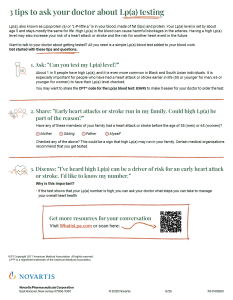
3 Tips to ask your doctor about Lp(a) testing
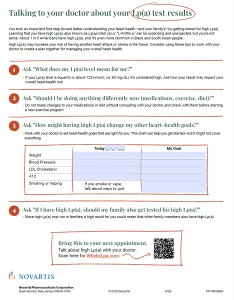
Talking to your doctor about your Lp(a) test results

Tell your family about high Lp(a)
Stay Connected—Continue Learning About Lipoprotein (a)
If lipoprotein (a) is part of your story—or something that runs in your family—staying informed matters.
By signing up at WhatIsLpa.com, you can:
- Receive ongoing educational updates about lipoprotein (a)
- Access new tools and discussion guides
- Learn how lipoprotein (a) fits into broader heart health conversations
- Stay up to date as research and resources evolve
Be the First to Learn About Lipoprotein (a)
Sign up to receive updates, resources, and tools about lipoprotein (a).
2/26 FA-11389054-1