NBRPA Brings Acclaimed Health Screening Program to Orlando For Members Based in the Area
NBRPA’s Health Screening Program To Make Stops in Los Angeles, Houston, Atlanta, Detroit, NBA All-Star in Indianapolis, NCAA Women’s Final Four in Cleveland and the NBRPA’s Annual Legends Summer Getaway in Las Vegas
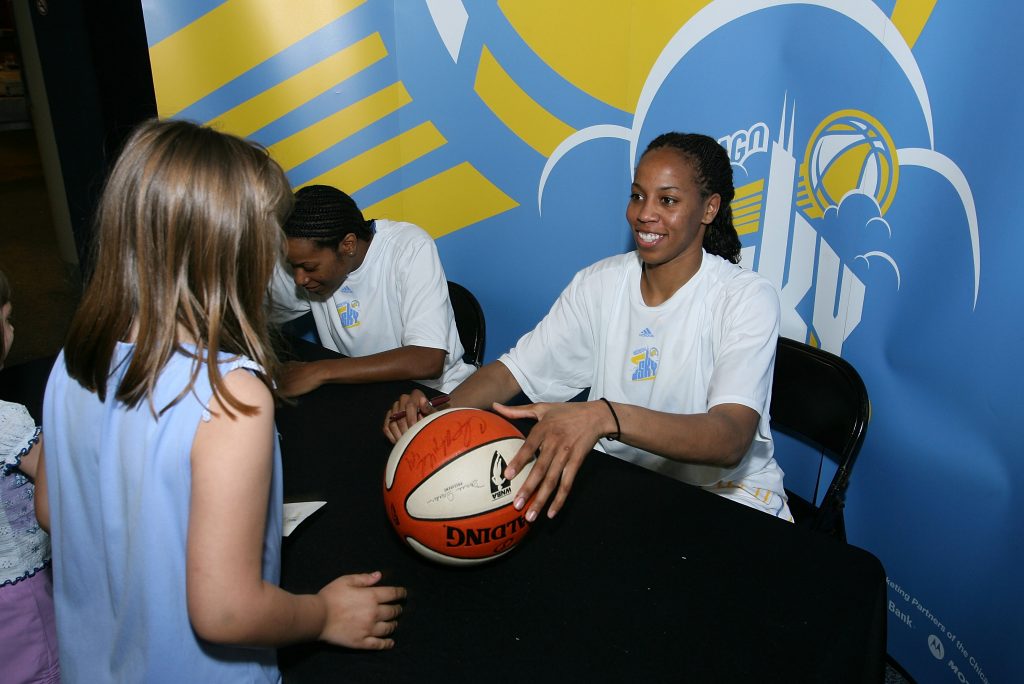
ORLANDO, Florida, (Nov. 13, 2023) - The National Basketball Retired Players Association (NBRPA), this past weekend brought its acclaimed Health Screening program for former players based in Orlando, Florida. NBA/WNBA/ABA and Harlem Globetrotter Legends in the greater Orlando area took part in the NBRPA’s Health Screening program at the Orlando Magic’s Amway Center on Saturday, November 11 and underwent wide-ranging screening procedures, that included blood work, electrocardiograms, echocardiograms and cardiology consultations. In addition to taking part in the program, Legends were also treated to an evening of basketball entertainment when the Orlando Magic hosted the Milwaukee Bucks.
The critically acclaimed program, under the supervision of the NBRPA Chief Medical Director Joe Rogowski, focuses on player health, delivered thorough, cost-effective, healthcare to its membership and address many of the medical issues experienced by the NBRPA population, while also educating them on proactive measures that promote a healthy lifestyle.
“We are thrilled at the opportunity to showcase our Health Screening Program for our members in the Orlando area.” said Scott Rochelle, President & CEO, NBRPA. “This program presents an incredible occasion for us to bring this impactful program to where our members live and we look forward to continuing to bring this invaluable benefit to other markets across the United States, as well as to Indianapolis for the NBA All-Star weekend in February and to our annual Legends Summer Getaway in Las Vegas later this year.”
Launched in conjunction with the NBPA in 2016, to deliver valuable, preventive long-term healthcare check-ups to former professional players across the U.S., the Health Screening Program has impacted hundreds of former players by providing preventative testing, including blood work, electrocardiograms, echocardiograms and cardiology consultations.
The NBRPA announced in 2022 that they would begin overseeing the program and brought along Joe Rogowski to head the operation. Rogowski, who served as the NBPA’s Chief Medical Officer for the past decade, was named the NBRPA’s Chief Medical Director in November 2022.
About the National Basketball Retired Players Association The National Basketball Retired Players Association (NBRPA) is comprised of former professional basketball players from the NBA, ABA, and WNBA. It is a 501(c) 3 organization with a mission to develop, implement and advocate a wide array of programs to benefit its members, supporters and the community. The NBRPA was founded in 1992 by basketball legends Dave DeBusschere, Dave Bing, Archie Clark, Dave Cowens and Oscar Robertson. The NBRPA works in direct partnerships with the NBA and the National Basketball Players Association. Legends Care is the charitable initiative of the NBRPA that positively impacts youth and communities through basketball. Scott Rochelle is President and CEO, and the NBRPA Board of Directors includes Chairman of the Board Charles “Choo” Smith, Vice Chairman Shawn Marion, Treasurer Sam Perkins, Secretary Grant Hill, Johnny Davis, Nancy Lieberman, CJ Kupec, Mike Bantom, Caron Butler, Jerome Williams, Clarence “Chucky” Brown and Dave Bing. Learn more at legendsofbasketball.com.
For Third Consecutive Year, Five Undergraduates Attending HBCUs Will Receive $10,000 Scholarships
Chicago, ILL. October 4, 2023 - The National Basketball Retired Players Association (NBRPA) today announced the 2023-2024 recipients of the Legends HBCU Scholarship, making them the third class of Legends Scholars.
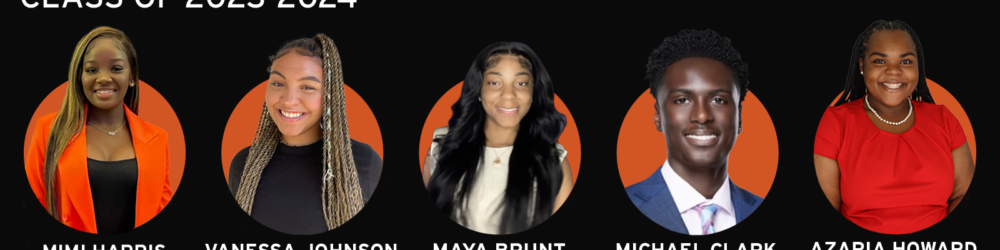
The five Legends Scholars are:
Mimi Harris | Albany State University, Class of 2026
Vanessa Johnson | Edward Waters College, Class of 2024
Maya Brunt | University of Arkansas Pine Bluff, Class of 2024
Michael Clark | Howard University, Class of 2024
Azaria Howard | Tennessee State University, Class of 2025
“These five exceptional students were selected from hundreds of HBCU student applicants due to their commitment to academic excellence and their positive impact in the world,” said Scott Rochelle, NBRPA President & CEO. “We are excited to introduce the 2023-24 Legends Scholars – our third class overall - and welcome them into our Legends family, where we will support them during their collegiate career and beyond.”
The five Legends Scholars will receive a $10,000 academic scholarship from the NBRPA for the 2023-2024 school year. In addition to addressing the financial needs of Legends Scholars, a comprehensive scholars program will assist Legends Scholars in the areas of career preparation and development, job placement and mentoring both during and after their undergraduate years.
The Legends HBCU Scholarship and Legends Scholars program were created in 2020 under the NBRPA’s Legends Care initiative as a way to honor the rich history of HBCUs and their alums while moving the legacy forward by supporting current HBCU undergraduates.
To learn more about the Legends HBCU Scholarship and Legends Scholars program, visit legendsofbasketball.com/HBCU.
About the National Basketball Retired Players Association The National Basketball Retired Players Association (NBRPA) is comprised of former professional basketball players from the NBA, ABA, and WNBA. It is a 501(c) 3 organization with a mission to develop, implement and advocate a wide array of programs to benefit its members, supporters and the community. The NBRPA was founded in 1992 by basketball legends Dave DeBusschere, Dave Bing, Archie Clark, Dave Cowens and Oscar Robertson. The NBRPA works in direct partnerships with the NBA and the National Basketball Players Association. Legends Care is the charitable initiative of the NBRPA that positively impacts youth and communities through basketball. Scott Rochelle is President and CEO, and the NBRPA Board of Directors includes Chairman of the Board Charles “Choo” Smith, Vice Chairman Shawn Marion, Treasurer Sam Perkins, Secretary Grant Hill, Johnny Davis, Nancy Lieberman, CJ Kupec, Mike Bantom, Caron Butler, Jerome Williams, Clarence “Chucky” Brown and Dave Bing. Learn more at legendsofbasketball.com.
Event to feature a trio of Ohio programs – Ohio State, Akron and Ohio – facing West Virginia, St. Bonaventure and Davidson, respectively
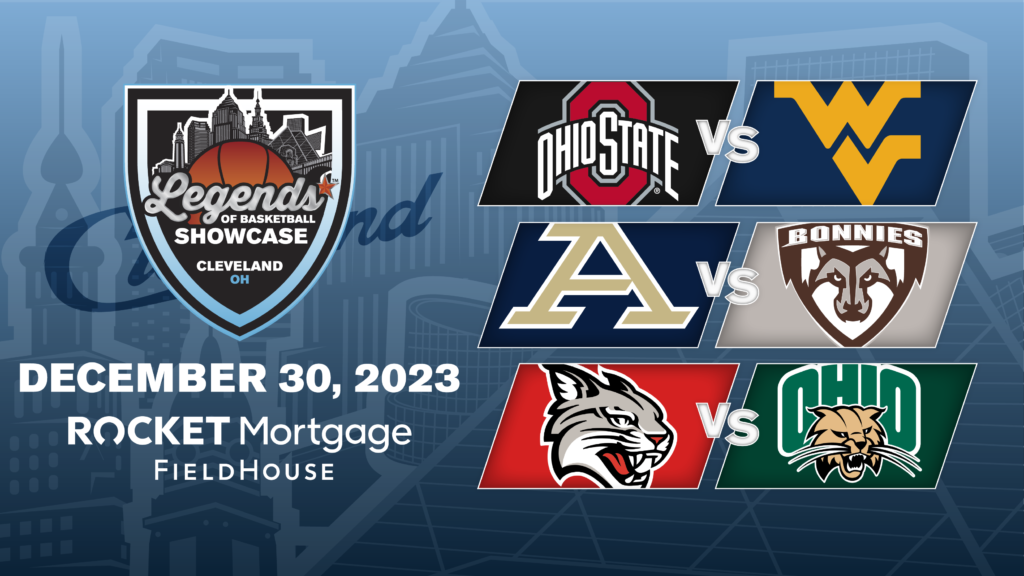
CLEVELAND, Ohio (September 28, 2023) – Rocket Mortgage FieldHouse in Cleveland will serve as the host venue for the Dec. 30 Legends of Basketball Showcase, a college basketball tripleheader headlined by the previously announced contest between the Ohio State Buckeyes and the West Virginia Mountaineers.
Two more games will make up the Dec. 30 schedule, leading off with the Ohio Bobcats facing the Davidson Wildcats, followed by the Akron Zips taking on the St. Bonaventure Bonnies. The Buckeyes and Mountaineers will tip off in primetime. Game times will be announced in the coming days.
The National Basketball Retired Players Association (NBRPA) is the title sponsor of the event. Founded in 1992, The NBRPA serves former professional basketball players in their transition into life after basketball and is the only alumni association of its kind supported directly by the NBA and National Basketball Players Association. Intersport, a Chicago-based sports marketing and events agency, is the operator of the Legends of Basketball Showcase.
Tickets for the event will go on sale on Oct. 12 at www.rocketmortgagefieldhouse.com, but fans interested in attending the tripleheader can register to receive event information and gain access to early tickets through a one-day presale on Oct. 11 by signing up at www.LegendsofBasketball.com/Showcase. Through the link, fans can also purchase VIP hospitality tickets through the NBRPA for the opportunity to meet former NBA and WNBA stars.
“Following the tremendous success of our inaugural Legends of Basketball Showcase last year in Chicago, we are proud to once again be a huge part of the college basketball calendar and bring the event to Cleveland,” said Scott Rochelle, President & CEO of the NBRPA. “With six elite basketball programs being featured and the games being staged at a top-of-the-line venue in Rocket Mortgage FieldHouse, we are sure this will be a can’t miss event for every basketball fan. We look forward to what promises to be an incredible afternoon and evening of hoops action.”
“We’re excited to work together once again with the NBRPA to stage the second edition of the Legends of Basketball Showcase, especially with the lineup of programs that will be participating this year,” said Mark Starsiak, vice president of basketball at Intersport. “This year’s tripleheader features very competitive regional programs with passionate fan followings, which will create an entertaining atmosphere at Rocket Mortgage FieldHouse.”
Ohio State and West Virginia have faced each other 17 times previously, with the Buckeyes holding a 9-8 edge in the series. The Mountaineers, however, have dominated recent history, winning eight of the last nine meetings, including each of the last three. The teams last met in 2019, with West Virginia earning a 67-59 victory at Rocket Mortgage FieldHouse in 2019.
This will be the fourth all-time meeting between Akron and St. Bonaventure, with the Zips carrying a 2-1 edge in the series. The teams have split the last two meetings, with Akron winning a 2018 tilt and St. Bonaventure claiming a 2020 victory. The first meeting between the teams was back in 1942.
Ohio and Davidson have met three times previously, with the Wildcats having won each matchup. Davidson has won a pair of home games as well as a neutral site contest in 2006 in Tempe, Ariz.
The Legends of Basketball Showcase is one of many events that is part of Intersport’s early season college basketball calendar, which has seen considerable growth in the last five years. After initially launching a four-team event in Fort Myers in 2018, the Chicago-based agency has announced plans to host at least eight different events during the first eight weeks of the 2023-24 season, with an additional announcement to come in the ensuing days. The current Intersport early season calendar includes:
Nov. 10: Radford vs Marshall (The Greenbrier Resort, White Sulphur Springs, W. Va.)
Nov. 20-22: Fort Myers Tip-Off (Suncoast Credit Union Arena, Fort Myers, Fla.)
Nov. 23-25: Elevance Health Women’s Fort Myers Tip-Off (Suncoast Credit Union Arena, Fort Myers, Fla.)
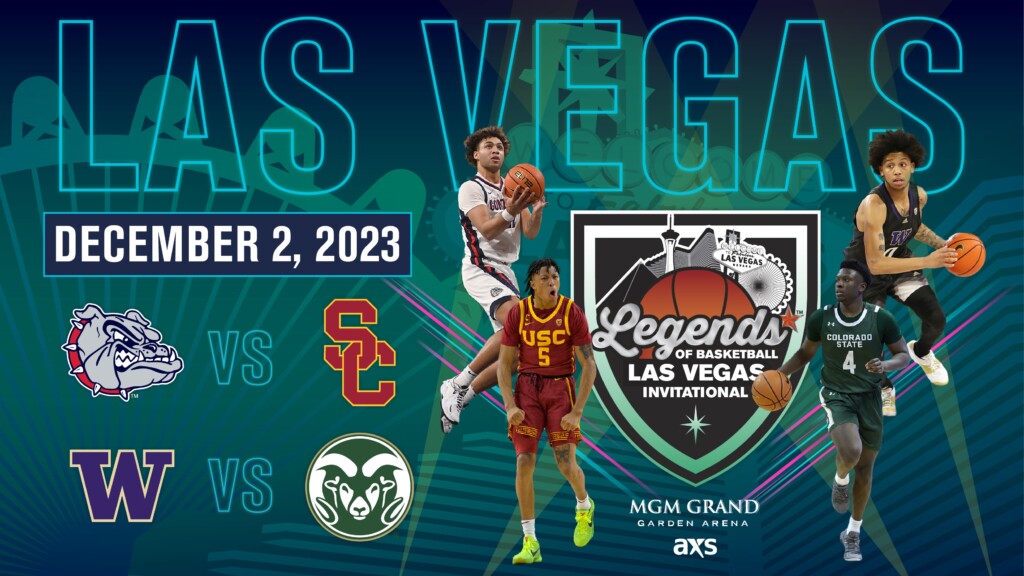
Dec. 2: Legends of Basketball Las Vegas Invitational; Gonzaga vs. USC, Washington vs. Colorado State (MGM Grand Garden Arena, Las Vegas, Nev.)
Dec. 14: Florida Tip-Off; Florida vs. East Carolina (RP Funding Center, Lakeland, Fla.)
Dec. 16: CBS Sports Classic; Ohio State vs. UCLA, North Carolina vs. Kentucky (State Farm Arena, Atlanta, Ga.)
Dec. 30: Legends of Basketball Showcase: Ohio State vs. West Virginia; Ohio vs. Davidson; Akron vs. St. Bonaventure (Cleveland, Ohio)
Team Quick Facts
Ohio State Buckeyes
Conference: Big Ten
Head Coach: Chris Holtmann
2022-23 record (conference): 16-19 (5-15)
2023 Conference Tournament: Semifinals
All-Time NCAA Tournament Appearances: 35
Top Returning Scorer: Zed Key (10.8 ppg)
West Virginia Mountaineers
Conference: Big 12
Head Coach: Josh Eilert
2022-23 record (conference): 19-15 (7-11)
2023 Conference Tournament: Quarterfinals
All-Time NCAA Tournament Appearances: 31
Top Returning Scorer: Seth Wilson (4.2 ppg)
Akron Zips
Conference: MAC
Head Coach: John Groce
2022-23 record (conference): 22-11 (13-5)
2023 Conference Tournament: Quarterfinals
All-Time NCAA Tournament Appearances: 5
Top Returning Scorer: Seth Wilson (4.2 ppg)
St. Bonaventure Bonnies
Conference: A-10
Head Coach: Mark Schmidt
2022-23 record (conference): 14-18 (8-10)
2023 Conference Tournament: Second Round
All-Time NCAA Tournament Appearances: 8
Top Returning Scorer: Daryl Banks III (15.4 ppg)
Ohio Bobcats
Conference: MAC
Head Coach: Jeff Boals
2022-23 record (conference): 19-14 (10-8)
2023 Conference Tournament: Semifinals
All-Time NCAA Tournament Appearances: 14
Top Returning Scorer: Jaylin Hunter (13.2 ppg)
Davidson Wildcats
Conference: A-10
Head Coach: Matt McKillop
2022-23 record (conference): 16-16 (8-10)
2023 Conference Tournament: Quarterfinals
All-Time NCAA Tournament Appearances: 15
Top Returning Scorer: Grant Huffman (9.4 ppg)
About Intersport
Since 1985, Intersport has been an award-winning innovator and leader in the creation of sports, lifestyle, culinary and entertainment-based marketing platforms. With expertise in Sponsorship Consulting, Experiential Marketing, Hospitality, Customer Engagement, Content Marketing, Productions and Sports Properties, this Chicago-based Marketing & Media Solutions Company helps their clients to create ideas, content and experiences that attract and engage passionate audiences. To learn more about Intersport, visit www.intersport.global, like us on Facebook or follow us on Twitter and Instagram.
About the National Basketball Retired Players Association The National Basketball Retired Players Association (NBRPA) is comprised of former professional basketball players from the NBA, ABA, and WNBA. It is a 501(c) 3 organization with a mission to develop, implement and advocate a wide array of programs to benefit its members, supporters and the community. The NBRPA was founded in 1992 by basketball legends Dave DeBusschere, Dave Bing, Archie Clark, Dave Cowens and Oscar Robertson. The NBRPA works in direct partnerships with the NBA and the National Basketball Players Association. Legends Care is the charitable initiative of the NBRPA that positively impacts youth and communities through basketball. Scott Rochelle is President and CEO, and the NBRPA Board of Directors includes Chairman of the Board Charles “Choo” Smith, Vice Chairman Shawn Marion, Treasurer Sam Perkins, Secretary Grant Hill, Nancy Lieberman, CJ Kupec, Mike Bantom, Caron Butler, Jerome Williams, Clarence “Chucky” Brown and Dave Bing. Learn more at legendsofbasketball.com.
Rocket Mortgage FieldHouse is Northeast Ohio’s premier sports and entertainment facility. Home of the Cleveland Cavaliers, Cleveland Monsters and the annual Mid-American Conference (MAC) Men’s and Women’s Basketball Tournament, the Rocket Mortgage FieldHouse also hosts major attractions, top-tier concert tours, family shows and signature events to the greater Cleveland area. Each year, Rocket Mortgage FieldHouse hosts more than 200 diverse ticketed events and 1,400 private events that draw more than 2 million patrons to downtown Cleveland.
Preseason No. 7 Gonzaga will face No. 21 USC as part of Dec. 2 doubleheader that also features Washington-Colorado State in Las Vegas
LAS VEGAS (September 26, 2023) – A west coast showdown between preseason top-25 programs Gonzaga and USC headlines the Legends of Basketball Las Vegas Invitational, a college basketball doubleheader set for Dec. 2 at MGM Grand Garden Arena. Washington and Colorado State will open the Saturday night doubleheader at 7 p.m. ET on CBS Sports Network and will be followed by the Bulldogs and Trojans at 10 p.m. ET on ESPN.
The National Basketball Retired Players Association (NBRPA) is the title sponsor of the event. Founded in 1992, The NBRPA serves former professional basketball players in their transition into life after basketball and is the only alumni association of its kind supported directly by the NBA and National Basketball Players Association. Intersport, a Chicago-based sports marketing and events agency, is the operator of the Legends of Basketball Las Vegas Invitational.
Tickets for the event will go on sale on October 13 at www.axs.com, but fans interested in attending the doubleheader can register to receive event information and gain access to early tickets through a one-day presale on October 12 by signing up at www.legendsofbasketball.com/vegas. Through the link, fans can also purchase VIP hospitality tickets to pregame and postgame events through the NBRPA for the opportunity to meet former NBA and WNBA stars.
“The NBRPA is thrilled to build on and expand our partnership with Intersport to present the Legends of Basketball Las Vegas Invitational,” said Scott Rochelle, President & CEO NBRPA. “The combination of deep NBRPA ties to the participating college basketball programs, a tremendous location in Las Vegas and a world-class venue in the MGM Grand Garden Arena, promises to make this event a must-watch for all college hoops fans. We look forward to showcasing the action and fanfare that these four renowned basketball programs are sure to bring.”
“Las Vegas is known for major, must-see events and this doubleheader fits that bill,” said Mark Starsiak, vice president of basketball at Intersport. “With four dynamic programs on the court and an engaged partner in the NBRPA, the Legends of Basketball Las Vegas Invitational will offer an incredible experience for fans. Both Gonzaga and USC are among the favorites to win their respective leagues and have extremely talented rosters that position them for dangerous runs through the NCAA Tournament, while Colorado State and Washington each have the ingredients to push for postseason berths as well.”
This will be the fourth all-time meeting between USC and Gonzaga with the Trojans owning a 2-1 mark in the series. The Bulldogs won the most recent meeting, an Elite Eight showdown in the 2021 NCAA Tournament. Washington and Colorado State have also played three times previously with the Rams having won twice, including the most recent meeting between the programs in 2012.
Both Gonzaga and USC are consensus preseason top-25 programs and should once again contend for not only their respective conference championships, but deep NCAA Tournament runs this coming season. For the preseason No. 7 Bulldogs, three impact transfers – Ryan Nembhard (Creighton), Steele Venters (Eastern Washington) and Graham Ike (Wyoming) – step in the fill the void left by departing starters Drew Timme, Julian Strawther and Rasir Bolton. Anton Watson and Nolan Hickman return as likely starters for head coach Mark Few, who is set to begin his 25th season as the Bulldogs head coach. In the last 24 years, Gonzaga has made the NCAA Tournament every season, advanced to two national championship games and made 10 Sweet 16 appearances, winning more than 83 percent (689-135) of its games since Few took over.
Preseason No. 21 USC may boast the most dynamic backcourt in the country next season as the Trojans return all-conference guard Boogie Ellis and welcome the nation’s No. 1 recruit in the Class of 2023, Isaiah Collier. Returning starters Kobe Johnson and Joshua Morgan, along with graduate transfer DJ Rodman, will give the Trojans a deep, experienced core. Andy Enfield is entering his 11th season with the program and looks to guide the Trojans to the NCAA Tournament for the fourth straight season, which would mark the longest streak in program history. Enfield’s USC teams have won 20 or more games in seven of the last eight seasons.
Sixth-year Colorado State head coach Niko Medved has established the Rams as a consistent presence in the Mountain West Conference. CSU has won double-digit conference games in three of the past four seasons. The Rams return three starters from last season’s team including four-time All-Mountain West guard and 2022 Bob Cousy Award Finalist Isaiah Stevens. Stevens led the team in scoring (17.9 ppg) and assists (6.7 apg) in 2022-23. Patrick Cartier and Jalen Lake also return from starting for CSU last year, while they add a trio of Centennial State transfers in Nique Clifford, Javonte Johnson and Joel Scott.
Washington, under seventh-year coach Mike Hopkins, returns two All-Pac-12 starters from last season – Keion Brooks Jr. and Braxton Meah – and welcomes a bevy of high caliber transfers led by Kentucky transfer Sahvir Wheeler and Rutgers transfer Paul Mulcahy. Brooks is the Pac-12's leading returning scorer after averaging 17.7 points and 6.7 rebounds per game and reunites with his former Kentucky teammate Wheeler. Wheeler was a Bob Cousy award finalist as a junior in 2022 before enduring an injury plagued season last year. Mulcahy finished his Rutgers career fourth on the program’s all-time assists list. Meah started 31 games last year, averaging 8.8 points and 7.2 rebounds per game.
The Legends of Basketball Las Vegas Invitational is one of many events that is part of Intersport’s early season college basketball calendar, which has seen considerable growth in the last five years. After initially launching a four-team event in Fort Myers in 2018, the Chicago-based agency has announced plans to host at least seven different events throughout the course of the 2023-24 season, beginning with the Radford-Marshall neutral site game at The Greenbrier in West Virginia (Nov. 10) before hosting 25 games during a nine-day stretch from Nov. 17-25. First, the inaugural Arizona Tip-Off will be held Nov. 17-19, followed by the Fort Myers Tip-Off from Nov. 20-22 and the Elevance Health Women’s Fort Myers Tip-Off from Nov. 23-25. In December, Intersport will manage the Legends of Basketball Las Vegas Invitational on Dec. 2 and the CBS Sports Classic in Atlanta on Dec. 16 before finally hosting the Ohio State-West Virginia neutral site contest in Cleveland on Dec. 30. Additional event announcements will be forthcoming in the coming weeks.
About Intersport
Since 1985, Intersport has been an award-winning innovator and leader in the creation of sports, lifestyle, culinary and entertainment-based marketing platforms. With expertise in Sponsorship Consulting, Experiential Marketing, Hospitality, Customer Engagement, Content Marketing, Productions and Sports Properties, this Chicago-based Marketing & Media Solutions Company helps their clients to create ideas, content and experiences that attract and engage passionate audiences. To learn more about Intersport, visit www.intersport.global, like us on Facebook or follow us on Twitter and Instagram.
About the National Basketball Retired Players Association
The National Basketball Retired Players Association (NBRPA) is comprised of former professional basketball players from the NBA, ABA, and WNBA. It is a 501(c) 3 organization with a mission to develop, implement and advocate a wide array of programs to benefit its members, supporters and the community. The NBRPA was founded in 1992 by basketball legends Dave DeBusschere, Dave Bing, Archie Clark, Dave Cowens and Oscar Robertson. The NBRPA works in direct partnerships with the NBA and the National Basketball Players Association. Legends Care is the charitable initiative of the NBRPA that positively impacts youth and communities through basketball. Scott Rochelle is President and CEO, and the NBRPA Board of Directors includes Chairman of the Board Charles “Choo” Smith, Vice Chairman Shawn Marion, Treasurer Sam Perkins, Secretary Grant Hill, Nancy Lieberman, CJ Kupec, Mike Bantom, Caron Butler, Jerome Williams, Clarence “Chucky” Brown and Dave Bing. Learn more at legendsofbasketball.com.
The MGM Grand Garden Arena is home to concerts, championship boxing and premier sporting and special events. The Arena offers comfortable seating for as many as 16,800 with excellent sightlines and state-of-the-art acoustics, lighting and sound. Prominent events to date have included world championship fights between Evander Holyfield and Mike Tyson as well as Floyd Mayweather vs. Canelo Alvarez as well as Floyd Mayweather vs. Manny Pacquiao; and concerts by The Rolling Stones, Madonna, Elton John, Bruce Springsteen, Paul McCartney, Bette Midler, George Strait, Justin Timberlake, Beyonce, U2, Lady Gaga, Bruno Mars, Coldplay, Alicia Keys, Jimmy Buffett and the Barbra Streisand Millennium Concert. The MGM Grand Garden Arena also has been home to annual events including the Academy of Country Music Awards, the Billboard Music Awards, the Latin GRAMMY Awards, iHeartRadio Music Festival, Pac-12 Men’s Basketball Championship and Frozen Fury NHL pre-season games hosted by the Los Angeles Kings.
Legends Led Sherman Indian High School Youth in Basketball Activities and Life Skills Curriculum
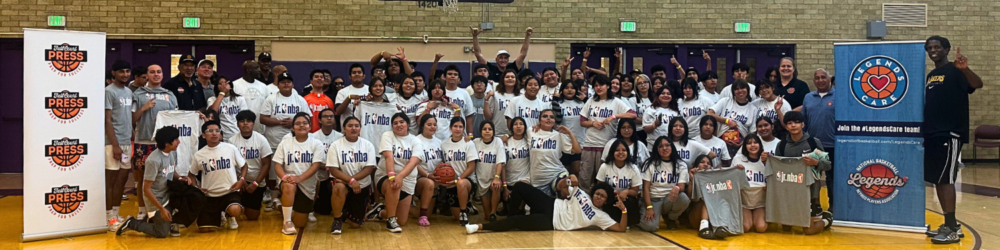
CHICAGO, ILL. September 21, 2023 – The National Basketball Retired Players Association (NBRPA) and its Los Angeles Chapter teamed up to bring basketball, fun and life skills lessons to youth at Sherman Indian High School, a boarding school for Native Americans, on Saturday, September 9th (9010 Magnolia Ave. Riverside, CA 95203) for the 3rd consecutive year. Led by Los Angeles Chapter President & ABA Legend Rick Darnell, NBA & Lakers Legend AC Green, NBA Legends Duane Cooper, Darwin Cook, Louis Nelson, and Juaquin Hawkins, WNBA Legend Linda Fröhlich, local youth participated in a wide array of basketball instruction including proper passing and shooting techniques, defensive drills and the value of effort.
Additionally, the students were treated to donated school/dorm supplies and apparel, as well as free lunch from local food trucks, onsite for the event, donated by the LA Chapter Members. NBA All-Star AC Green, proud to represent both Choctaw and Cherokee heritage, emphasized the value of the opportunity that Sherman Indian High School provides. The All-Native high school serves more than 200 students from 76 Native American tribes who apply to attend from across the country.
Full Court Press is designed to support the development of participating youth both on and off the court through basketball instruction, mentorship and an innovative life skills curriculum. Several Legends of Basketball, both men and women with NBA, WNBA, ABA and/or Harlem Globetrotters backgrounds, serve as basketball coaches and mentors for the 150-200 youth at each clinic while NBRPA community partners offer additional life skills programming.
Since 2013, the NBRPA has held over 100 Full Court Press: Prep for Success clinics impacting more than 7,500 underserved youth both locally and globally. With your support, Full Court Press and the NBRPA can increase their impact by donating here.
View images of the Full Court Press Program in Los Angeles:
(PHOTO CREDIT – NBRPA)
About the National Basketball Retired Players Association The National Basketball Retired Players Association (NBRPA) is comprised of former professional basketball players from the NBA, ABA, and WNBA. It is a 501(c) 3 organization with a mission to develop, implement and advocate a wide array of programs to benefit its members, supporters and the community. The NBRPA was founded in 1992 by basketball legends Dave DeBusschere, Dave Bing, Archie Clark, Dave Cowens and Oscar Robertson. The NBRPA works in direct partnerships with the NBA and the National Basketball Players Association. Legends Care is the charitable initiative of the NBRPA that positively impacts youth and communities through basketball. Scott Rochelle is President and CEO, and the NBRPA Board of Directors includes Chairman of the Board Charles “Choo” Smith, Treasurer Sam Perkins, Secretary Grant Hill, Nancy Lieberman, CJ Kupec, Mike Bantom, Caron Butler, Jerome Williams, Shawn Marion, and Clarence “Chucky” Brown. Learn more at legendsofbasketball.com.
About Sherman Indian High School Sherman Indian High School (SIHS) is an off-reservation boarding high school for Native Americans. Originally opened in 1892 and operated by the Bureau of Indian Education/Bureau of Indian Affairs and the U.S. Government Department of the Interior, the school serves grades 9 through 12. SIHS students represent over 76 federally recognized tribes from across the U.S. About 68% of students come from reservations throughout the U.S. (the remaining students come from urban or suburban settings). Learn more about Sherman Indian High School at shermanindian.org/.
On Monday, September 18, the NBRPA debuted a new content series across @NBAalumni social media channels, remixing some of the best moves in NBA history as part of count down to the start of the upcoming 2023-2024 NBA season.
Legends Mixtapes, also known as "Mixtape Mondays," reimagine old-school NBA highlights set to music from the modern era, starting with a contemporary showcase of 6x NBA Champion Bob Cousy accompanied by M.O.P.'s "Ante Up." The Houdini of the Hardwood himself loved seeing the new interpretation of his ball-handling talent and said: "What a treat!"
In just the first 24 hours after its release, the inaugural mixtape produced over half a million views, plus thousands of engagements, and counting.
Watch the first two installments of the Legends Mixtape series below and follow @NBAalumi on Twitter, Instagram, TikTok and Threads to be the first to see the latest Legends Mixtape every Monday.
#LegendsMixtapes
There are few events that can compare with The Naismith Memorial Basketball Hall of Fame Enshrinement Weekend, and this year’s celebration showed exactly why. For two days – spread out between the Mohegan Sun Resort in Uncasville, Connecticut and the birthplace of basketball in Springfield, Massachusetts – basketball’s immortals walked among us. They laughed, cried, shared stories from their playing and coaching days, signed autographs and showed the world why they are Hall of Famers.
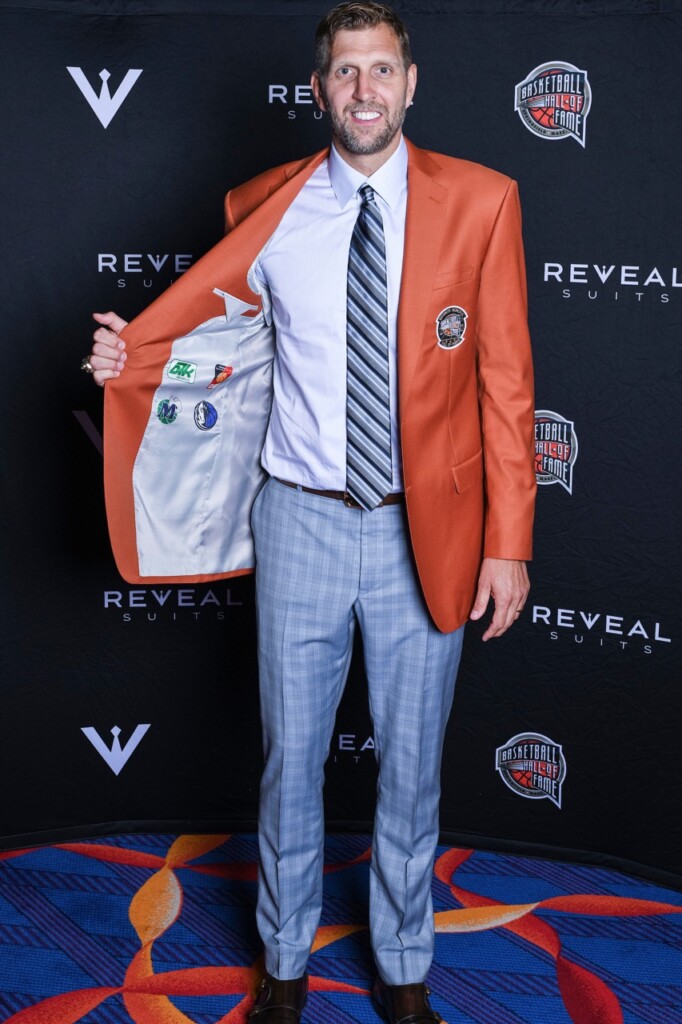
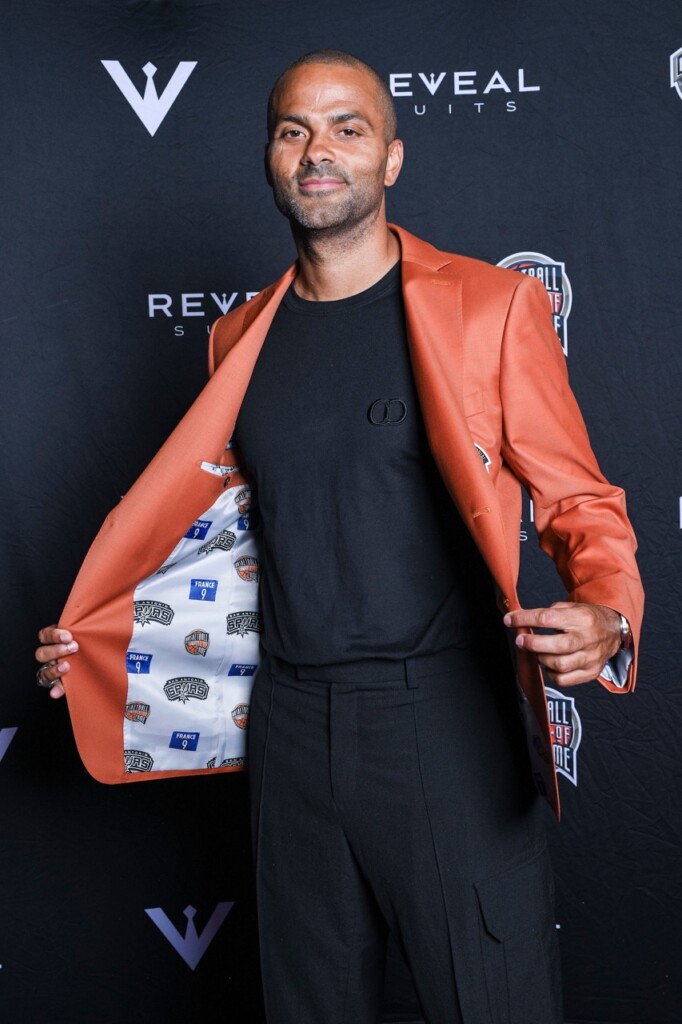
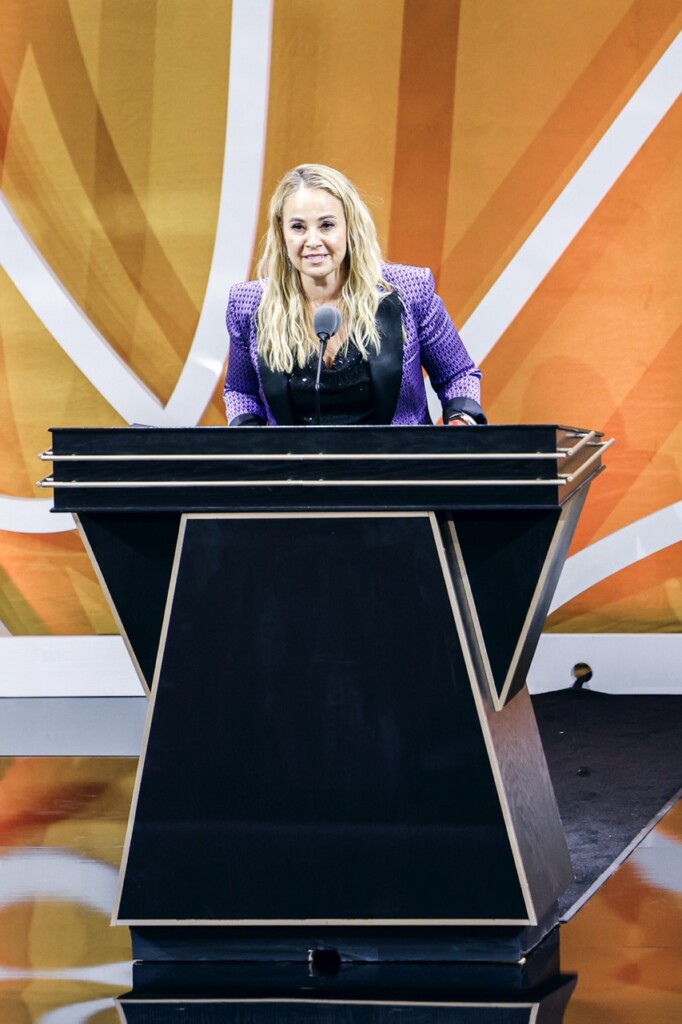
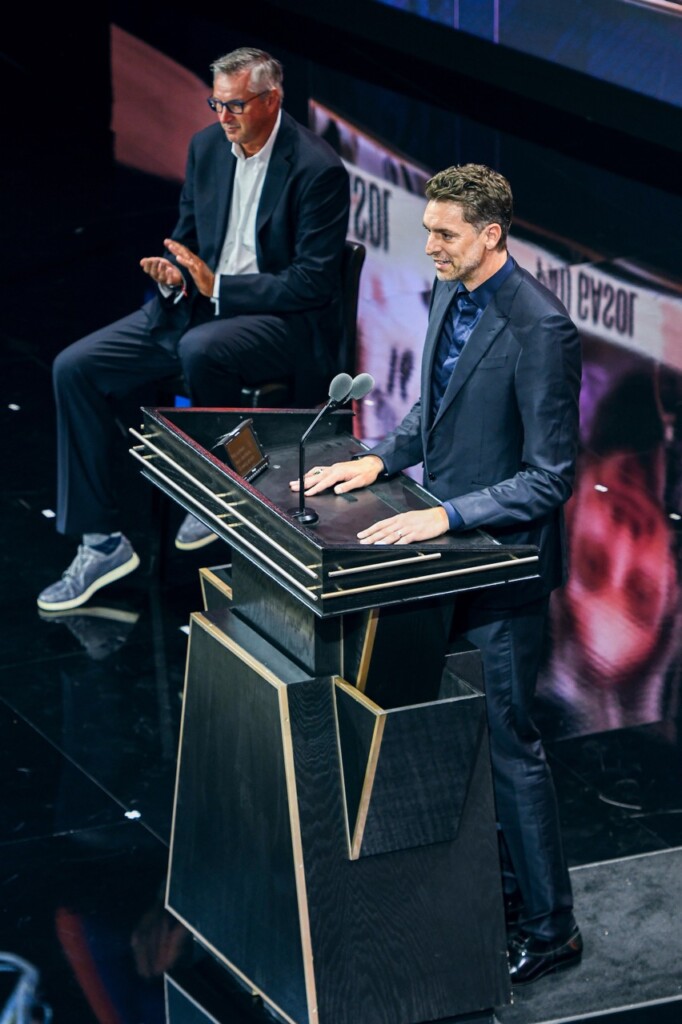
Beginning on Friday night at the luxurious Mohegan Sun Resort & Casino, Legends from the NBA, WNBA, ABA and every other professional basketball entity you can imagine arrived en masse in time to attend the Hall of Fame’s first public event - an exclusive autograph session with the Class of 2023. Where else in the world can one room hold Dirk Nowitzki, Dwyane Wade, Pau Gasol, Becky Hammon, Tony Parker, Gregg Popovich, and the members of the 1976 Team USA Women’s Basketball team just to name a few? Fans from around the globe gathered and waited their turn to celebrate their heroes and take home a little piece of memorabilia that would give them a lifetime of memories. Following the autograph sessions, participants readied themselves for the official introductory press conference where global media waited to interview and speak with each of the members of the 2023 HOF Class.
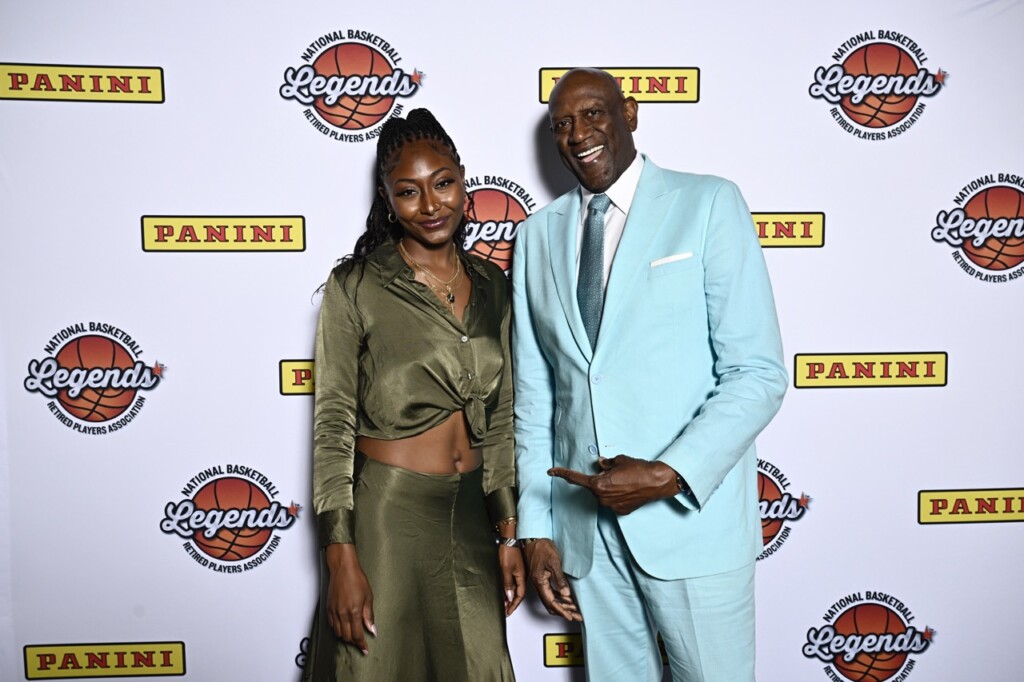
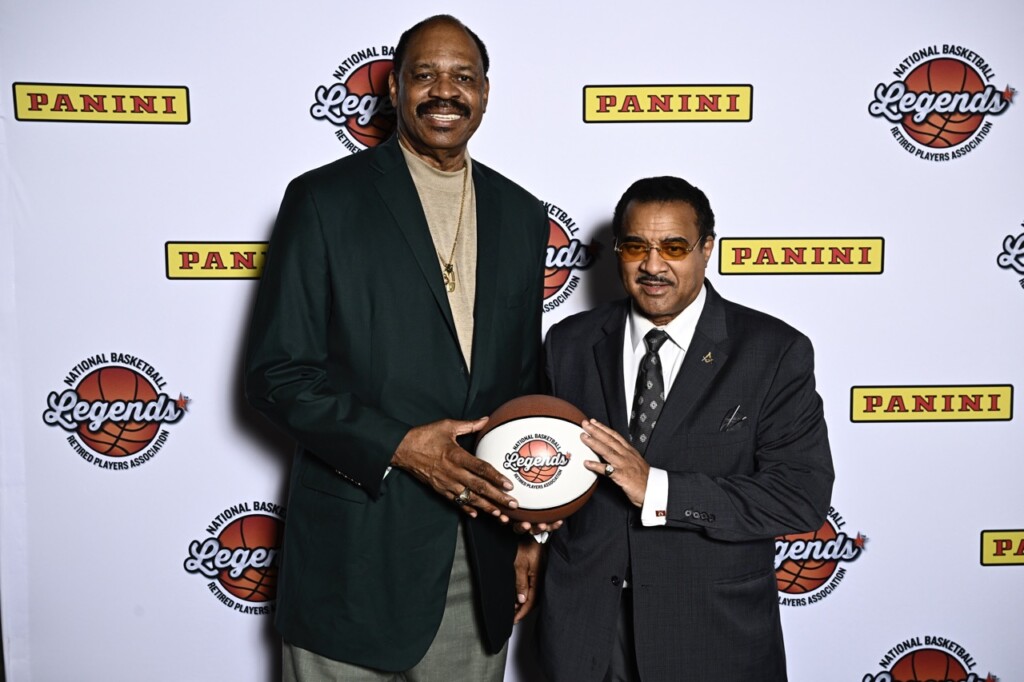
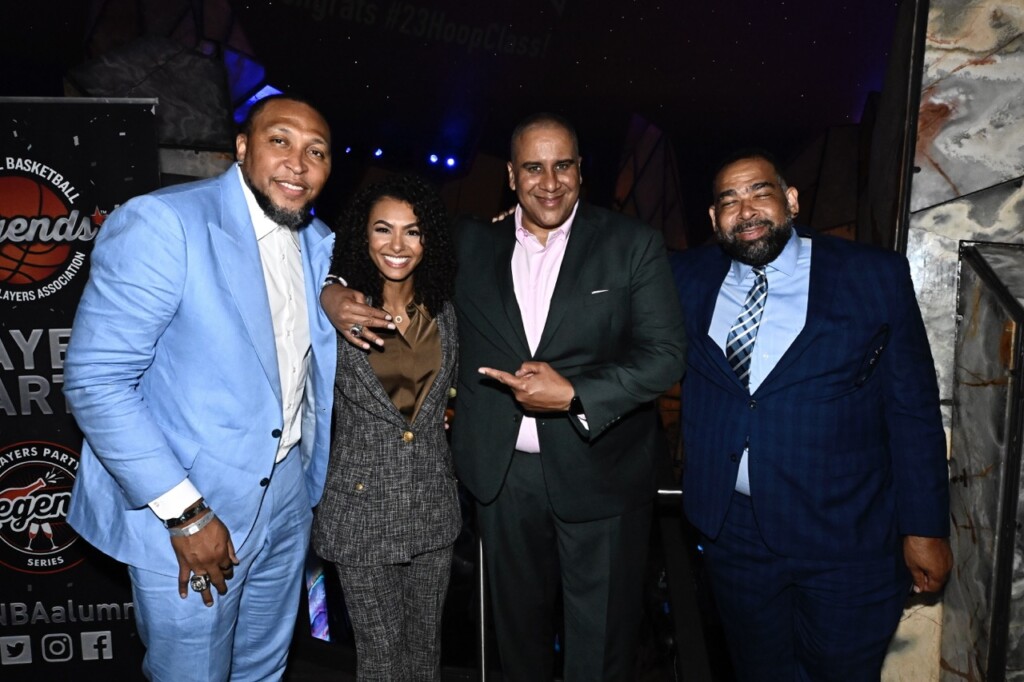
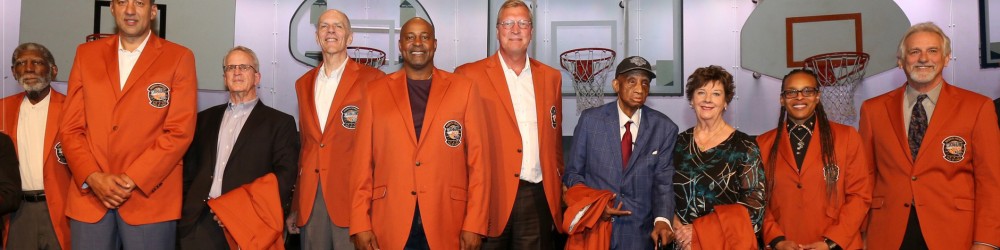
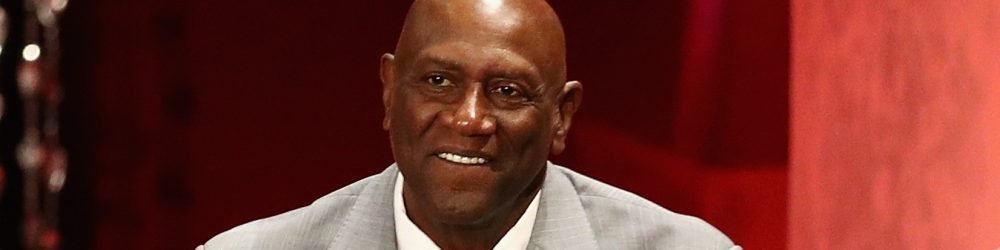
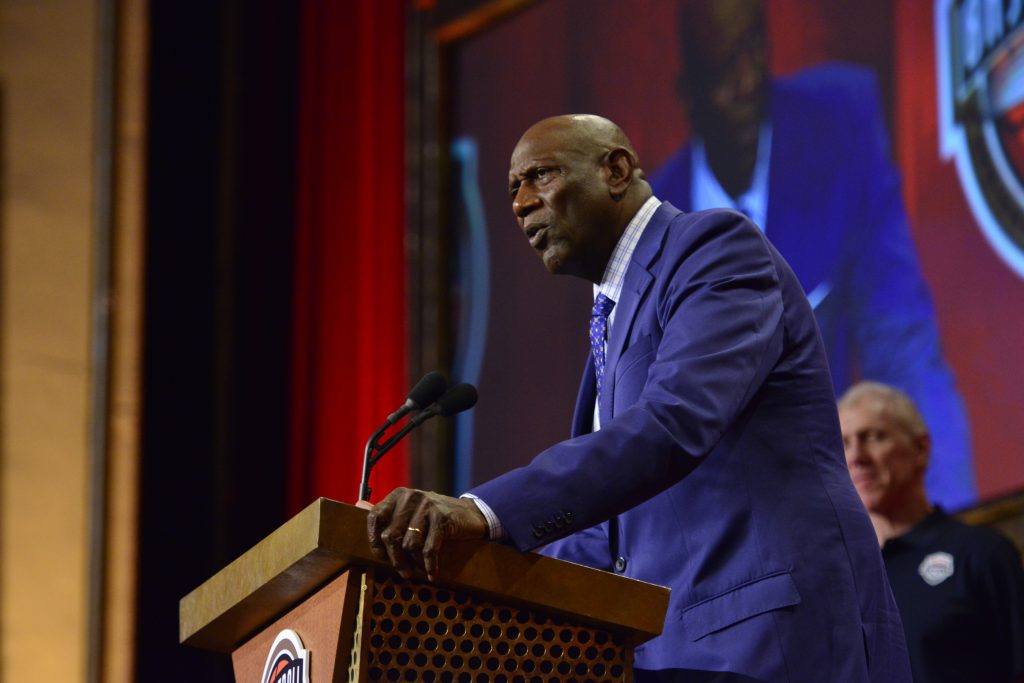
That same evening, the Tip-Off Celebration and Awards Gala was held in the Mohegan Sun Convention Center and the honored guests were awarded the Class of 2023 rings, presented by Baron Championship Rings, the Class of 2023 Hall of Fame jackets, and highlighted by the presentation of the Hall’s annual John W. Bunn Lifetime Achievement Award, the Mannie Jackson: Basketball’s Human Spirit Awards, and the Curt Gowdy Media Awards. If that wasn’t enough for the first day, the celebration continued long into the night with the annual National Basketball Retired Players Association’s “Players Party” at the ultra-chic Vista Lounge located in the center of the Mohegan Sun Casino. At the “Players Party,” Hall of Famers Nancy Lieberman, Spencer Haywood, Artis Gilmore rubbed elbows with Legends like Avery Johnson, business partners from Panini – who served as the event’s host and ESPN’s brightest talent in Malika Andrews, Andraya Carter who were there to celebrate their esteemed colleague, Marc Spears, being named recipient of the HOF’s Curt Gowdy Media Award.
Saturday morning, members, fans, business partners, dignitaries and the honorees took the short ride through Connecticut’s and Western Massachusetts’ idyllic countryside and green hills en route to the city of Springfield to prepare for a magnificent reception at the Marriott Springfield Downtown and the weekend’s main event – The 2023 Enshrinement Ceremony at the famed Symphony Hall. The red carpet stretched for blocks, as only a space of this size could accommodate the legendary talent that was set to walk on it prior to the night’s celebration. Pau Gasol, flanked by his family and close friends greeted everyone he could and took in the entire spectacle and explained how the international presence at this event echoed what a global game basketball has become. Dirk Nowitzki and Dwyane Wade smiled as broadly as when they won NBA Championships. Becky Hammon beamed with pride as she led her children down the path that led to the stairs at Symphony Hall and Tony Parker seemed to be carrying an entire French nation on his shoulders.
But this evening wasn’t just about the newest members about to be enshrined, it belonged to ALL Hall of Fame members. One-by-one members from classes dating back decades strutted the red carpet – blowing kisses, shaking hands, and stopping to speak with the enormous media contingent on hand to document this night. Alex English, Spencer Haywood and Chris Bosh proudly showed off their HOF orange jackets. The inimitable Calvin Murphy, as nattily dressed as ever, explained the joy he feels to have a gathering of this kind with every generation of basketball talent– past and present, and Allen Iverson discussed the immense honor for him to be able to induct his friend and protégé Dwyane Wade.
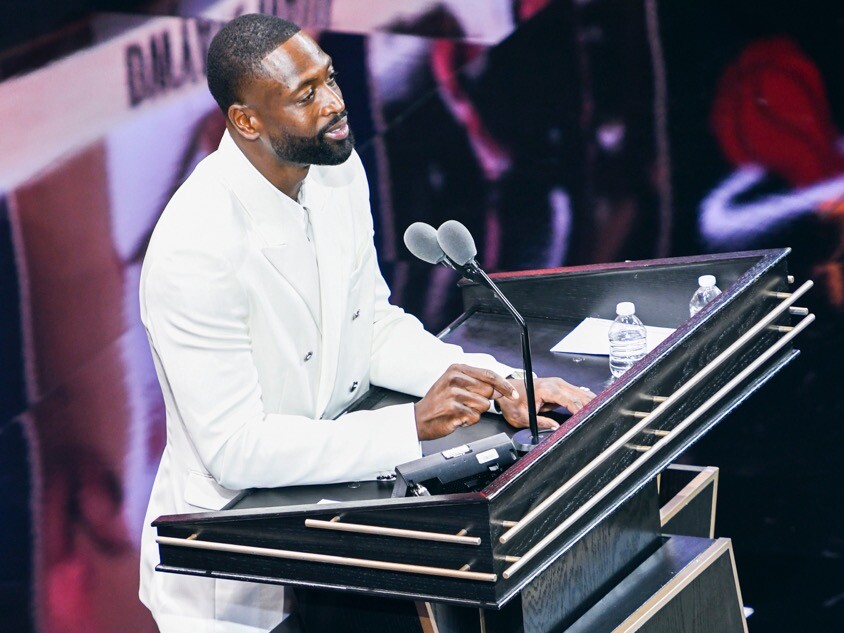
As the ceremony tipped off, one-by-one the honored gave their speeches, told their stories, and thanked the people that supported them along this journey. There was, however, one sense of commonality in all of the speeches - a sense of appreciation. Appreciation at being able to play this game. Appreciation at the hard work and humility it took to get to this level. Appreciation of the recognition about to be bestowed upon them and most of all an appreciation and respect for the game itself.
The night’s last honoree, Dwyane Wade, may have summed it up best when he called his father up to join him on stage. “We in the Hall of Fame, dawg”, he said. Yes, Dwyane, we are, and we can’t wait to do it all over again with next year’s class.
by Caleb
Friedman
Juwan
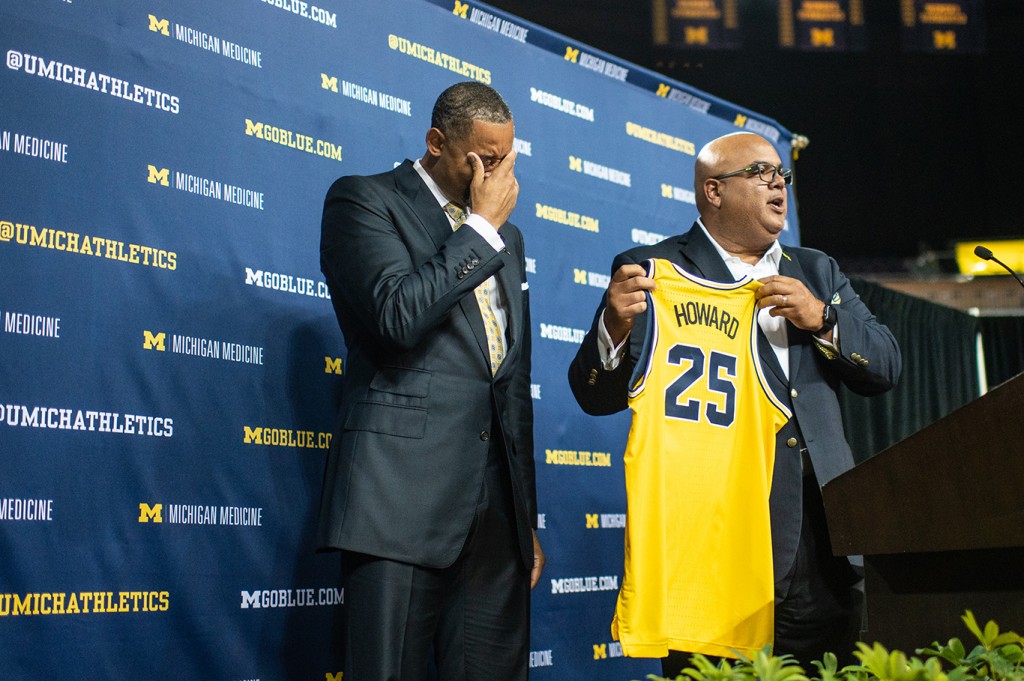
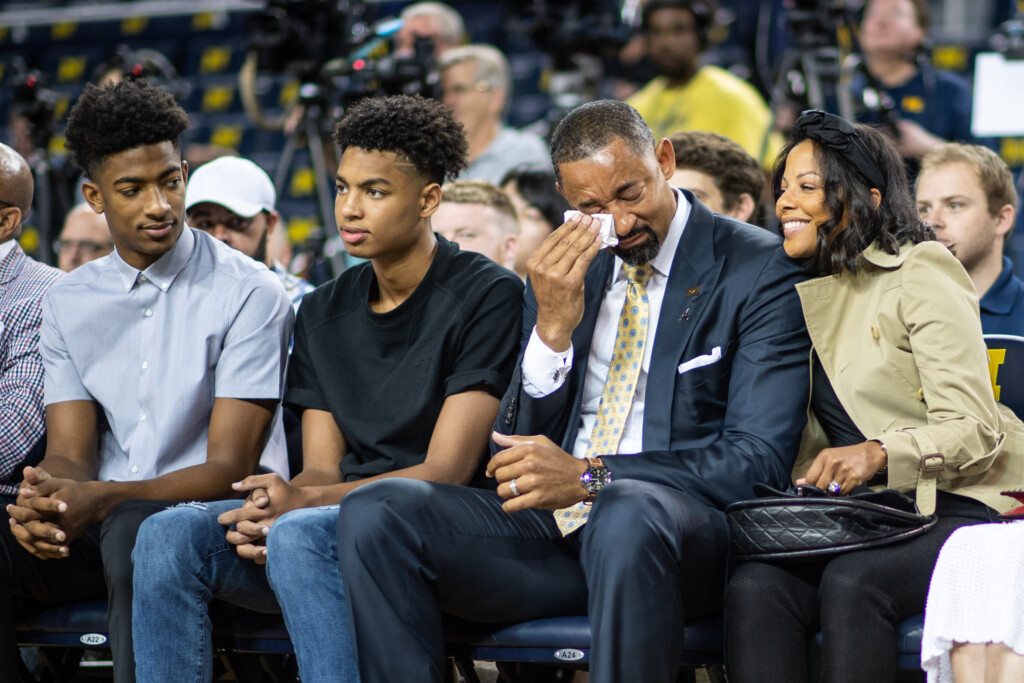
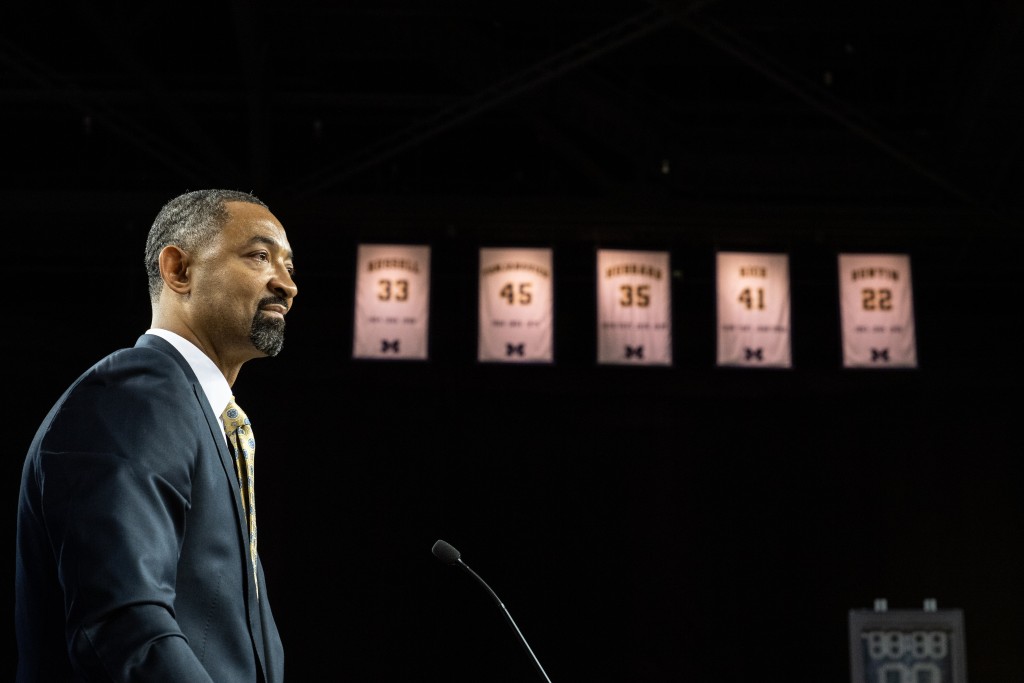
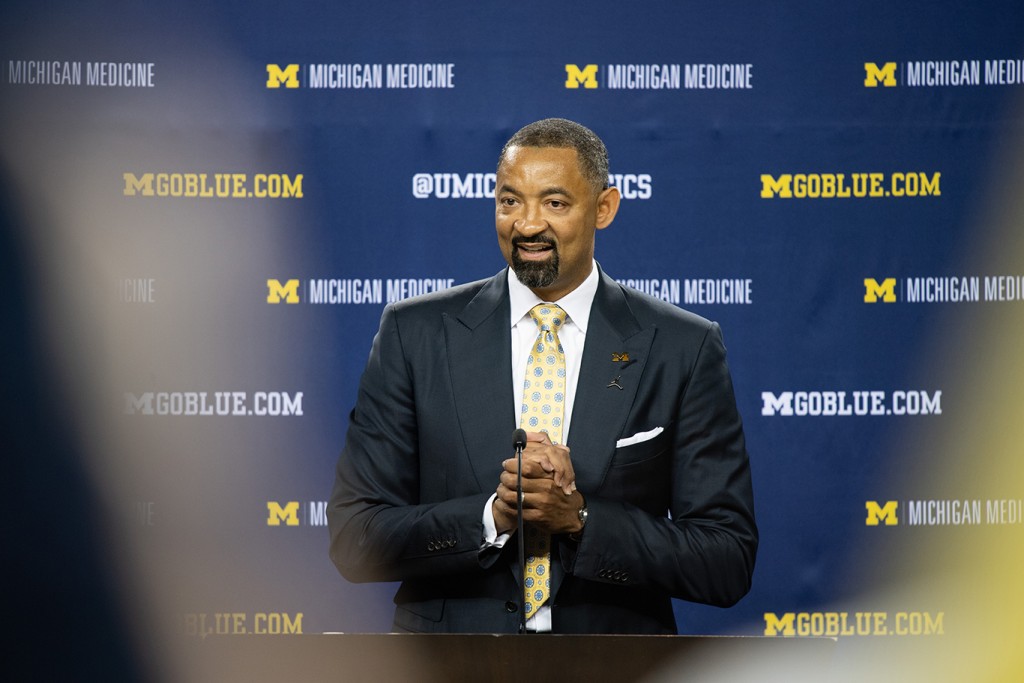
Howard stands at the podium, taking a deep breath as those in the room applaud
and cheer. About to speak, he stops. He bows his head and covers his eyes before
they begin to swell with tears – tears that embody the emotion Howard feels in
this punctuating moment for what has been a crazy few days.
He turns
around with his back facing the wall, taking a few final deep breaths to
compose himself.
“Tears of
joy,” he says.
You will
understand the tears if you understand the place. Juwan Howard is back in Ann
Arbor at the University of Michigan, where he once captivated the country as a
player. This time around, Howard is donning a block “M” pin on his lapel – he’s
just been introduced as the head men’s basketball coach.
You can
tell Howard is reflecting back to the journey that led him to this defining
moment in his career. He mentions the last time he had a press conference at
Michigan, where he was declaring for the 1994 NBA Draft. Howard touched on his
late grandmother and best friend and what they meant to him, before speaking to
the tradition and pride he has to coach his new players – his new family.
Howard
calls this his “dream job,” and tells the origin story of his path to Ann Arbor
more than two decades ago. Howard is raw and genuine, his words impassioned.
It’s clear just how much this all means to him.
Juwan
Howard is home.
Juwan
Howard sits at a table during Big Ten Media Day in Chicago, and he sticks out
like a sore thumb.
Howard is
the only head coach without previous college coaching experience. The other 13
coaches in the Big Ten Conference average 24.5 years of college coaching
experience, and 12 of them have 15 or more years of college coaching under
their belts.
Then
there is Howard who took the Michigan head coaching job after he spent his
entire coaching career in the NBA from 2013-2019. After six seasons on the
Miami Heat bench under head coach Erik Spoelstra, Howard jumped at the
opportunity to return to his alma mater, despite frequently being a candidate
for NBA head coaching vacancies.
“I’ve
always been asked the question, ‘Will I ever want to coach college
basketball?’” Howard tells Legends Magazine. “My answer was always ‘One job, if
it became available. The University of Michigan.’”
At its
core, the main part of Howard’s new job is comfortable to him. He has been
around the sport professionally for the past 25 years and around youth
basketball and AAU circuits through his sons. From a coaching and teaching
standpoint, Howard is confident his NBA experience will translate to the
college level.
It is all
the other stuff that is new and will take some getting used to, chiefly
recruiting. Howard is getting used to being on the phone a lot more to talk to
recruits, and that relationship-building isn’t something foreign to him. After
all, he was once at the other end of those calls as the recruited player.
“The NCAA
rules and regulations will take some time to learn and understand,” Howard
says. In the NBA, for example, there is no limit on how often a coach can work
with players. At the college level, Howard can only work with players for a set
number of hours per day and week.
In
addition to his basketball duties of coaching and recruiting, Howard serves as
a face and ambassador for the school, which means meetings with alumni and
donors are also a major part of his job.
“Being a
head coach in college, I’m not only coaching the players, but I’m helping run
an institution,” Howard says. “I have to choose my staff, hire those guys, make
sure I balance a budget. I’m like an Erik Spoelstra, a Pat Riley and Andy
Elisburg all in one.”
Still,
Howard makes the leap at a time when former NBA players are coming to college
seemingly in droves, with names like Penny Hardaway and Patrick Ewing also
returning to coach their alma maters. Success has been difficult to come by for
many of the former NBA players coaching in college, but there has been a clear
advantage in recruiting, particularly for Hardaway.
“There’s
been a changing of the guard with coaches that have been around a long time,”
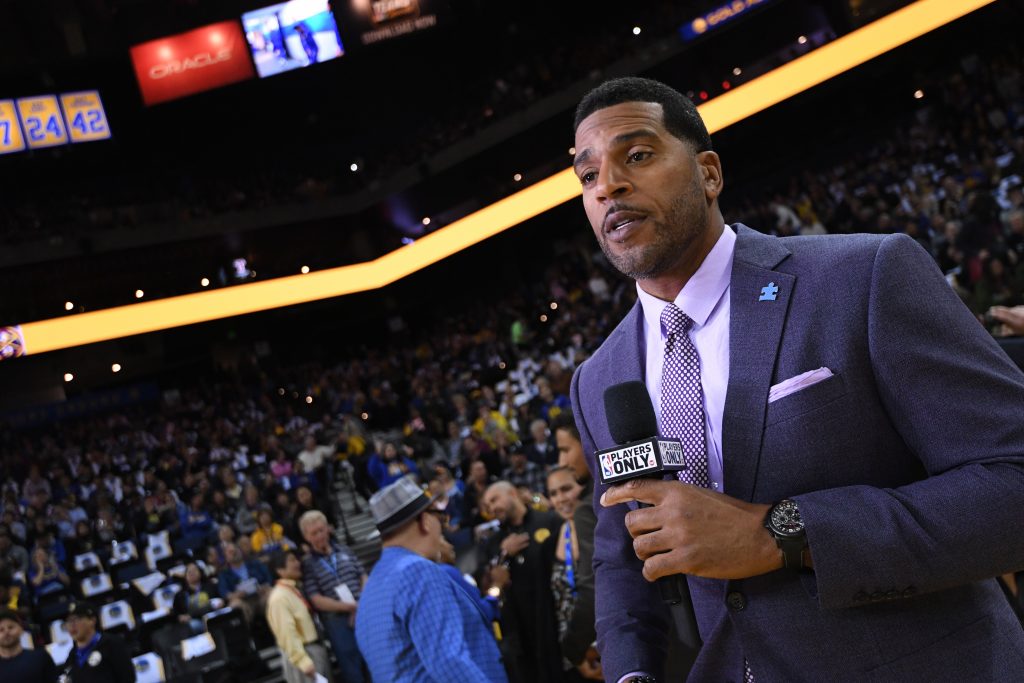
former NBA player and current Vanderbilt head coach Jerry Stackhouse tells Legends
Magazine. “There’s a new wave of coaching. I think athletic directors are
thinking outside the box, just trying to find guys that can relate to this
generation of players…a lot of those guys are one-and-dones now coming into the
NBA.”
Speaking
to that trend, Howard’s college teammate and current ESPN personality Jalen
Rose voiced his support on ESPN for Howard getting the Michigan job early in
the process, in part because of his ability as a recruiter.
“He would
be a terrific head coach,” Rose said. “He would be terrific at developing young
talent. He would own the Michigan market.”
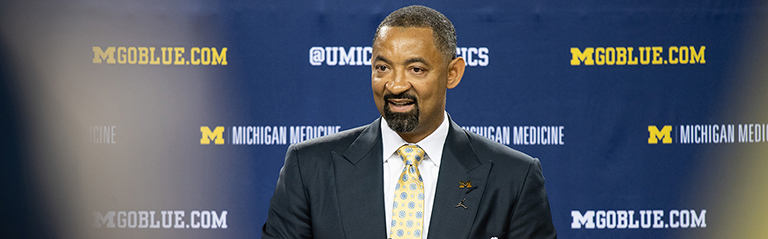
New Michigan Men’s Basketball head coach Juwan Howard is introduced at a press conference at Crisler Center in Ann Arbor, MI on May 30, 2019.
If Juwan
Howard’s opening press conference at Michigan signified a symbolic beginning,
his first day of summer workouts was the real start.
It was
then, when Howard walked into a gym with players to coach and a team to
prepare, that Howard finally felt he arrived.
“It was
that day, the first day of workouts, when it hit and sunk in. I’m the head
coach at the University of Michigan,” Howard says. “That was my epic moment, an
epic time of sinking in that ‘this is real now.’”
This
upcoming season will bring a number of firsts and milestones for Howard, who’s
ready to embark on his first season as a head coach. Now, as the season gets
going, and the initial emotions fade, everything turns to actual basketball.
As Howard
prepares to lead a team for the first time as head coach, he thinks back to the
years he’s spent in and around the game, giving him a lifetime of experience to
fall back on. He knows he can do this.
“I played
this game before for many years, I’ve had a lot of success doing it at all
levels, high school, college and pro,” Howard says. “I’ve learned a lot, and I
know the game and I know I can coach the game.”
by Martin Kaufmann
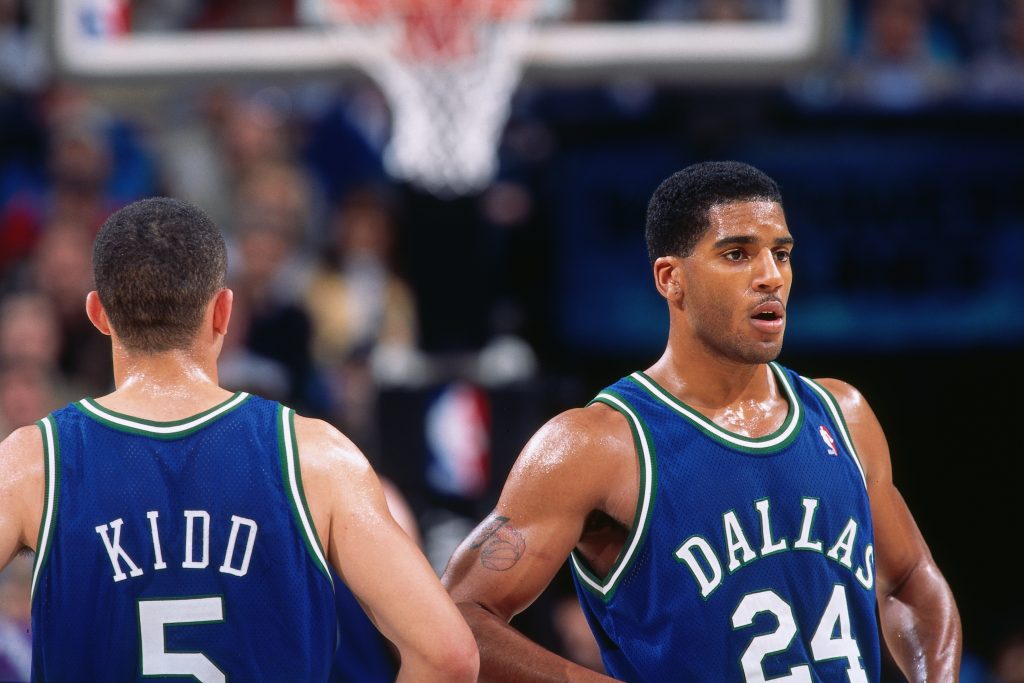
Even before he played his first NBA game, Jim Jackson realized that he had to begin preparing for life after basketball.
Jackson was the fourth pick in the
1992 NBA draft after an All-American career at Ohio State. But he only played
28 games his first season with the Dallas Mavericks because of a contract dispute.
“I had already started a (long-term) game plan,” Jackson said. “It really
started my first year when I had to sit out. That gave me insight into the way
the business works. And then in my third year when I sprained my ankle really
bad, (I realized) this thing can be over in a heartbeat, so you have to prepare
yourself.”
Copyright 1996 NBAE (Photo by Rocky Widner/NBAE via Getty Images)
Through his first four seasons,
Jackson was a fixture in the Mavericks’ starting lineup and a reliable scorer,
peaking at 25.7 points per game in that injury-plagued third season. During the
1996-97 season, however, he was traded to the New Jersey Nets, beginning an
odyssey that came to define his career. Over 14 seasons, he played for an
NBA-record 12 teams. Only three other players have played for as many teams.
That’s a mixed blessing for an
athlete. Jackson lamented never being able “to establish a camaraderie, a
legacy with one team. That’s what you search for when you’re a player.” He
would have loved to have become a Dallas institution, such as Dirk Nowitzki,
who just retired after 21 seasons. But there might have been some benefits to
his itinerant career. He lived all around the country, developing friendships
he never would have made had he stayed in one city. “That can benefit you later
in life,” he said.
After 14 seasons, and his playing
time dwindling with the Phoenix Suns and Los Angeles Lakers, Jackson knew it
was time to move on.
“I just wasn’t the type who wanted
to be the 12th man on the bench,” Jackson said. “After the 2006 season, I said,
‘I’m just tired of it. I just want to move on with my life.’”
He already had interests in real
estate and restaurants through business partners in Dallas, but he balked when
his agent, Mark Termini, suggested that he consider moving into broadcasting.
Termini finally convinced Jackson to meet with broadcasting agent Maury
Gostfrand, who in 2007 steered him toward the Big Ten Network. Jackson spent
eight years there, overlapping with son Traevon’s playing career at Wisconsin.
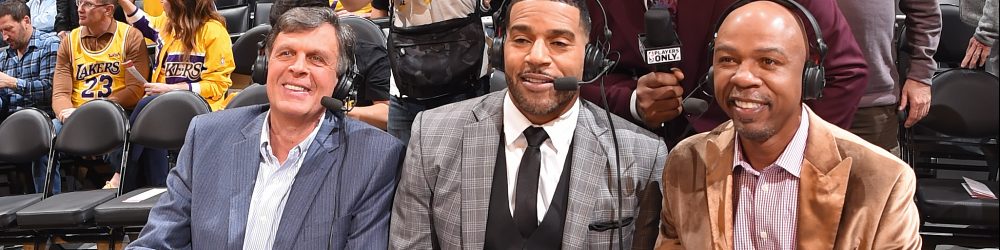
(Photo by Jennifer Pottheiser/NBAE via Getty Images)
Jackson attacked broadcasting much
the way he used to game-plan for an opponent during his playing career. He
leaned on his Ohio State network, seeking advice from CBS’ Clark Kellogg and
ESPN’s Kirk Herbstreit. He also hired a coach and pored over video of his
on-air appearances.
“You’ve got to work. It’s just like
watching game tapes,” he said. “You break it down and point out things I’ve
done wrong — maybe eye contact, verbiage, maybe slowing down my cadence. It’s a
lot of stuff that you might not be aware of ... You have to be honest with
yourself. You also have to watch the ones who do it the best. I think that’s
the best teaching tool.”
His workload has mushroomed since
2015, when he jumped to Fox Sports 1, where he maintains a busy schedule
calling college games. During March Madness, he called televised games for
Turner Sports during the early rounds, then moved over to the radio side for
Westwood One at the Final Four.
“I love the live games the best,” he
said. “There’s nothing like being in the action.”
When he’s not on the road, you often
can find him in Fox Sports’ studios, swapping hot takes on LeBron James and NBA
life on shows such as “Speak for Yourself” and “Undisputed.” Occasionally some
of those contacts he made during his playing career float back into his life.
Copyright 2019 NBAE (Photo by Noah Graham/NBAE via Getty Images)
In December, John Calipari, who coached
Jackson when he played for the New Jersey Nets in the mid-1990s, asked his
former player to speak to his Kentucky Wildcats when they visited New York.
(Jackson joked that when college coaches ask him to talk to their players,
“they have to prep the team, because they don’t know who I am.”)
Jackson urged the players to spend more time
focusing on their defense and rebounding rather than obsessing over their
offense; if they did that, he said, the points would flow naturally.
“Ride the wave,” he told the
Wildcats. “I was fortunate to play 14 years. You’re going to go through this
(moving his hand through the air like waves on an ocean). It’s a microcosm of
life. But how you handle it, what your outlook is, how you choose to deal with
it, is going to determine how you get through it.”
Jackson has practiced what he
preaches over the past 12 years. Broadcasting became his new passion, and he
never took it for granted. To this day, he said, he still seeks advice from
experts to help him improve.
“The same tools you used to become a
successful basketball player — the work ethic, the studying, the attention to
detail, listening, taking advice — are the same tools you’ll need when you move
to that third phase (post-NBA) of your life,” Jackson said.
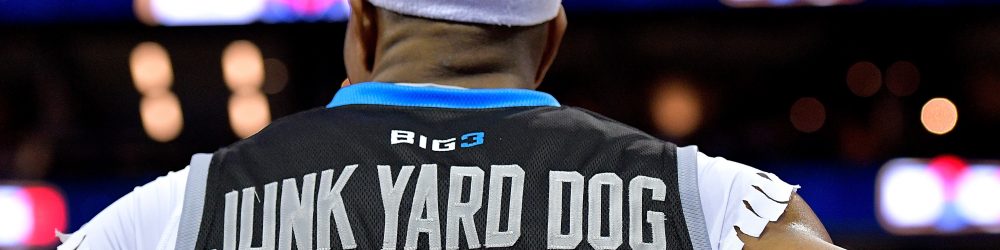
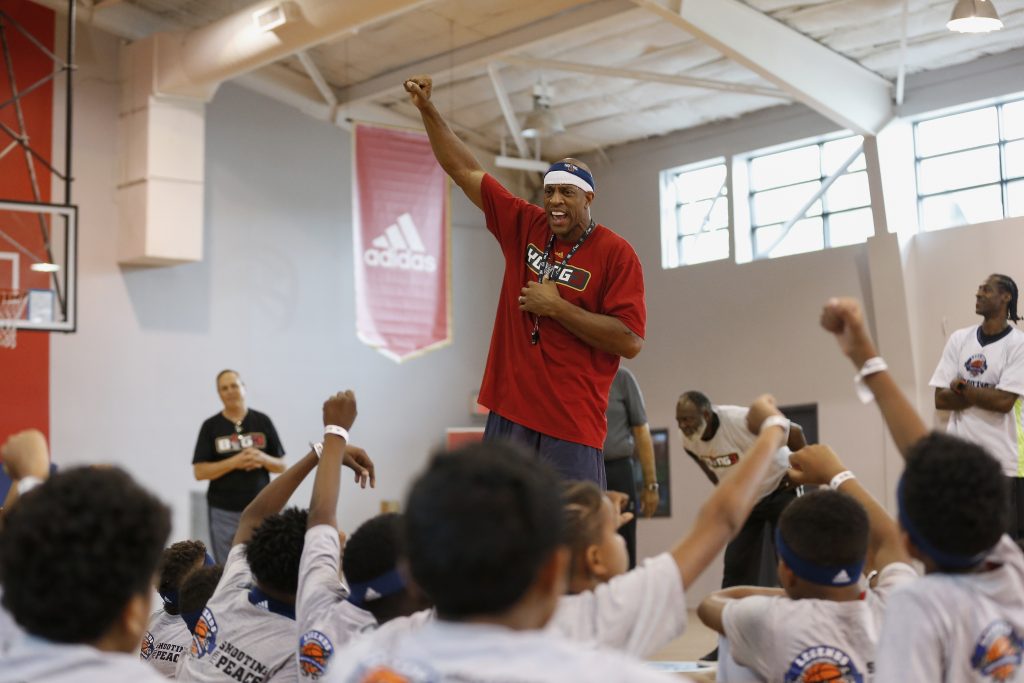
Jerome Williams, known to many as the Junk Yard Dog, earned his nickname during his stint with the Detroit Pistons. His teammates coined him ‘JYD’ for his hard work ethic and willingness to do a lot of the “garbage” jobs, such as rebounding, playing defense, setting strong screens and the other basic fundamentals. Since the conclusion of his playing career, Jerome has used that same mentality to promote the importance of education to the country’s youth via his Shooting for Peace program.
(Photo by Tim Warner/BIG3/Getty Images)
Williams, who
initially began his own service project called Jerome’s Youth Development (JYD)
Project, has long been an advocate for helping young people reach their highest
potential. After starting the National Basketball Retired Players Association
(NBRPA) Las Vegas chapter and outreach to the local community, Williams
immediately saw the parallels between the NBRPA’s community initiatives and
those of the JYD Project, and decided to pair the two together. Today, that
marriage is known as Shooting for Peace.
“The efforts on
both sides were focused on professional and retired athletes going out and
serving the community,” said Williams. “Because doing so really requires a
brigade of players, I knew it was the perfect time to bridge the two
initiatives. The result is a program that serves a multitude of young people in
a significant way.”
Shooting for
Peace has since grown into a nationwide tour and includes several different
facets that aid students. Benefits include digital education services,
scholarships from notable HBCUs, and school visits from the Legends themselves,
which include a Q&A panel, poetry and essay contest, and a game pitting the
Legends against the school team. Last year, NBA Legends made stops in various
chapter cities, including Las Vegas, Boston, Harlem, Philadelphia, New Orleans,
Toronto, Miami, Oakland, and more.
It is no secret
that students who go on to earn a college degree are more likely to lead
productive lives in society. Jerome Williams is no stranger to this fact. He
has worked harder than most to achieve his dreams. In fact, Jerome paid his own
tuition at a junior college to earn his Associate’s degree. He went on to
receive a full scholarship from Georgetown University, as well as several other
certifications in his professional life. His passion for this work is clear and
reflective of his own personal values.
(Photo by Tim Warner/Getty Images)
“I believe that
kids today need their education now more than ever,” says Williams. “We take
great pride in showing them how the Legends of the game and a good education
work hand-in-hand.”
Local chapters
encourage all members — from the
NBA to WNBA to the Harlem Globetrotters —
to get involved with Shooting for Peace. No matter what their professional
playing careers looked like, each and every one of them started at the same
place: school. All of these stories, especially those that include hardship,
are necessary for students to hear.
“By hearing directly from Legends, these young people learn that while they can be an athlete, it is being a student-athlete that is really most important for lifelong success.”
A special thanks to all of the chapter presidents for their leadership with Shooting for Peace. This program would not be what it is today without them.
by Sean Deveney
SPRINGFIELD, Mass. – It was a night for the overlooked, the underrated and the trailblazers whose contributions to the game have been too obscured by history.
The Naismith Memorial Basketball Hall of Fame held its induction night this weekend and welcomed a field of new members that included center Vlade Divac, a pioneer of international basketball who was drafted from Yugoslavia by the Lakers in 1989 and went on to become the first player born and trained outside the U.S. to appear in 1,000 NBA games.
The group also included one of the WNBA’s first stars, Teresa Weatherspoon, as well as defensive stalwarts Sidney Moncrief and Bobby Jones, unique face-up center Jack Sikma, championship coach Bill Fitch and five-time NBA All-Star Paul Westphal.
Divac opened the night with a speech that set the tone for the entire collection of inductees, speaking about his love for the game and emphasis the game puts on selflessness.
“I believe love gives you the power to share your best self and to inspire others,” Divac said. “Love liberates you the power to make the impossible possible. Just like in life, when you play basketball you have to give in order to receive. On the court you are not just making moves alone, you are also giving your physical and mental strength, your passion, your talent, your trust in your teammates. This way, the power can multiply and the whole team wins. Basketball is the opposite of selfishness.”
That resonated throughout Symphony Hall. Also inducted on Friday were Al Attles, who has been the face of the Warriors franchise for six decades—as a player, a coach and a franchise ambassador. Attles, chosen as a contributor, witnessed Golden State’s most recent dynasty, but was also on the floor as a point guard back when the team was based in Philadelphia in 1962, when Wilt Chamberlain scored 100 points in a game.
But, asked about the game earlier in the week, Attles was quick to point out that even Chamberlain’s dominating individual achievement had a team feel to it. “Well, I always remind people that we won the game, that’s the first thing,” Attles said. “The other thing is that Wilt tried to come out of the game. He did not want to score 100.”
Also inducted were Chuck Cooper, the first black player to be drafted by an NBA team; Carl Braun, a five-time NBA All-Star who played 13 seasons from 1947-62 and coached the Knicks briefly; the all-black Tennessee A&I teams (now Tennessee State) of 1957-59, which traveled to national tournaments, challenged segregation and were the first team to win three straight championships at any collegiate level; and the women’s teams of Wayland Baptist University (1948-82), who won 10 AAU championships and once won 131 consecutive games.
The honor was probably overdue for both Moncrief, who made five All-Star teams and won the first two NBA Defensive Player of the Year awards, and Sikma, who made seven All-Star teams and averaged 15.6 points with 9.8 rebounds. Sikma was also instrumental in bringing the 1979 NBA title to Seattle in his second NBA season.
But Sikma was best known for developing a step-back, face-up shot that became known as the “Sikma move.” It has regained popularity in the modern NBA, with fewer back-to-the-basket centers, but Sikma said it started mostly out of necessity—he grew 10 inches in his final two years of high school and arrived at tiny Illinois Wesleyan, as he described it, as a, “6-11, 195-pound specimen.”
Sikma recalled that, in his first Summer League game after being drafted by Lenny Wilkens and the Sonics in 1977, he had the misfortune of going against Moses Malone, who as already established as a star center. Because players can’t foul out in Summer League, Sikma said Malone wound up with 30-something points while Sikma had 10 fouls.
“The owner was there,” Sikma said, “and asked Lenny, ‘Is that our first-round draft pick?’”
The night was highlighted by the speech from Weatherspoon, whose passion for the game remains palpable even 15 years after her retirement. Weatherspoon won a gold medal with Team USA in 1988 and played overseas for 10 years before the advent of the WNBA. She created one of the great moments in league history when, playing for the New York Liberty in the 1999 Finals, she launched a buzzer-beater from beyond halfcourt that went in for a Game 2 win.
Speaking to her two brothers and three sisters seated nearby, Weatherspoon said, “I never had to look outside my family for my heroes. … I was well-protected, well-watched over and I hope that you know that everything about you, I watched. I took it from you, I took your perseverance, I took your consistency, I took your dedication, I took your determination, I took it and I ran with it. And I hope that I made you tremendously proud.
“We’ve gone through a lot together, we’ve done a lot together, we fought together. Tonight, we go in together.”
She went in, indeed, with a well-rounded group that finally got their due. It was a celebration of the hard-working stars, the players and coaches who often gave up the notoriety and big headlines to sacrifice for winning.
As Moncrief put it, “I take great pride being inducted into this Hall. But as I was trying to think of, what do you talk about? It’s not really about me. It’s not about a speech. It’s about the game of basketball. The game of basketball that has changed everyone’s life in this room.”
Have you heard of Chasity Melvin? If not, wake up!
Melvin is the epitome of what it means to dream big.
Her saying, “you can’t dream big enough” has carried her through a career
spanning more than 20 years, 12 as a professional in the WNBA. Originally from
Roseboro, North Carolina, Melvin attended North Carolina State University,
where she led the program to its first Final Four appearance during her senior
season in 1998. Following graduation, she was selected 11th overall in the 1999
WNBA draft and spent time with the Cleveland Rockers, Washington Mystics and
Chicago Sky.
Copyright 2010 NBAE (Photo by Ned Dishman/NBAE via Getty Images)
“I was reminded of that growing up in a small town,”
Melvin said of her ‘dream big’ saying. “I know what it’s like to set a goal,
achieve it and realize my dream.”
Melvin retired from professional
basketball in 2010 and was faced with a crossroad. Her desire to return to the
game in a coaching role was initially faced with some resistance. Her lack of
true coaching experience and available positions in the WNBA made it hard for
Melvin to make a seamless transition to the coaching ranks upon graduation.
Copyright 2018 NBAE (Photo by Brock Williams-Smith/NBAE via Getty Images)
“When I initially retired, people didn’t want to hire
me because I didn’t have enough coaching experience,” Melvin said. “For me, I
played for eight different coaches in my 12-year WNBA career. I played for a
lot of different systems and NBA coaches. I felt like I had enough experience
that should’ve given me that first opportunity.”
Enter the NBA Assistant Coaches Program (ACP).
Through the NBA ACP, former NBA and WNBA players interested in coaching at the
collegiate and professional levels can gain real experience and mentorship from
the game’s best coaches.
“It was a great avenue for me to get in front of people
who could get me to where I needed to be,” Melvin said. “I needed that
experience to get an opportunity and the NBA ACP gave that to me.”
Through her participation in the NBA ACP, Melvin
realized that there might be more opportunities outside of coaching women. “It
gave me the idea that maybe I could coach on the men’s side,” Melvin said.
“With the limited opportunities on the women’s side, this just made sense.”
Within two months of completing the program, Melvin
landed her first full-time coaching role with the Greensboro Swarm in the NBA G
League. As an assistant coach, Melvin was able to use her personal experiences
during her professional career to relate to the players. “I’ve been part of the
professional game. I was in their spot at one time,” she said.
Copyright 2007 NBAE (Photo by Gary Dineen/NBAE via Getty Images)
“It meant everything to get this opportunity,” Melvin
said. “For me, it was both challenging and rewarding at the same time. To be
part of helping these guys realize their dreams was special. I know what it’s
like to set a goal, to play pro and achieve that dream.”
Melvin found immediate success by leveraging her unique
journey and playing experiences. Her insightful perspective and first-hand view
of the game allowed her to gain the most out of her first season with the
Swarm.
“At the end of the day, I learned that basketball is
just basketball. Same plays, special situations, scouting. It’s all the same,”
Melvin said. “I know the level of confidence you need to have to succeed at
this level. I’ve done it. I’ve experienced it. And it gave me great pride that
I could share those experiences and help these guys further their careers.”
The opportunity also gave Melvin a new perspective on
the G League and the opportunities it can create for players. While she
continues to dream big herself, she is now able to share that message with
others.
“It’s not just about moving up to the NBA,” Melvin
said. “It’s also just as much about securing a great opportunity overseas to
support themselves and their families. There are so many opportunities these
guys can get from playing in the G League and so many awesome memories to be
made. Outside of the basketball court, I could relate to these guys more on a
personal level. That is where I’ve succeeded the most.”
Husband. Father. Mentor. Investor. These are just some of the many words that describe eight-year NBA veteran Eddie Gill. But before his basketball career took him all across the globe, he was just a kid from Aurora, Colorado who went on to overcome immense odds to realize his dream of playing in the NBA.
After high school, Gill enrolled
at the College of Eastern Utah, where he played minimal minutes and was given
few opportunities. The decision to transfer the following season to Salt Lake Community
College proved to be a game-changer for Gill. He would go on to average more
than 16 points and six assists per game.
After a standout season, Gill tested his skills at the D-1 level. He
transferred to Weber State in 1998 and went on to play two full seasons for the
Wildcats. MVP of the 1999 Big Sky Conference Tournament and named to the
First-Team All-Big Sky Conference, Gill leveraged his college successes into a
career in the NBA G League and eight seasons in the NBA, and spent significant
time overseas for teams in the Greek Leagues and Continental Basketball
Association. But, after a career spanning the globe, he still felt most at home
in Indiana.
2006 NBAE (Photo by Ron Hoskins/NBAE via Getty Images)
“When I knew retirement was a
real possibility, I asked myself ‘what’s next?’” Gill said.
Gill turned in his jersey in 2011 but couldn’t stay away from the game
for long. He started a youth skills development program in Indianapolis called,
“All Out Training”. Through the program, he led after-school initiatives for
kids that focused primarily on exercise and training.
“The NBA has a number of youth
initiatives. Working in camps, clinics and schools,” Gill explains. “Through
all these initiatives, I developed a passion for working with kids, especially
on the court, regardless of their skillsets. Not everyone wants to go to the
NBA — some kids just want to be able to play better on the playground! That’s
why I started ‘All Out Training’.”
What Gill didn’t know at the
time was that his youth training program would be an avenue for another career
option. One afternoon, Gill began talking with a father of one of the boys in
the program. The man had a successful career in wealth management and Gill was
intrigued. Fast forward to today and Gill has been active in the financial
management and investing industries for years.
Copyright 2005 NBAE (Photo by Sam Forencich/NBAE via Getty Images)
“Networking is tremendous in any business,” Gill says while reflecting on
his past. “It doesn’t mean you’re trying to get something out of someone,
you’re just building a relationship. You never know what you could do for
someone or what doors they can open for you. That’s what happened to me.”
Gill began hiring more coaches
to run All Out Training while he pursued his new goal of becoming a financial
advisor. He also knew that, through his time playing professional basketball,
he could be a great resource for other athletes looking to do the same thing.
But it wasn’t as easy as asking his new friend for a job.
“I had to do some serious
studying to get certified and licensed,” he says. “To be 34 and studying ...
that was a different experience than the first time around. It was hard!”
Gill worked for it and turned
into an incredible success story in the process. He has moved up in the ranks
as a financial advisor, while simultaneously juggling All Out Training and
pregame/postgame analyst work for the Indiana Pacers.
One of the most rewarding
aspects of Gill’s life is helping younger players through the process. The
biggest piece of advice he offers to current players is that basketball won’t
last forever. Even if you have a great playing career, 15 years or so is still
a short amount of time to make a lot of money. And then what? If you stop
playing at 35 years old, then you still have 65 years of life left.
Copyright 2007 NBAE (Photo by Bart Young/NBAE via Getty Images)
“Plan for your future,” he says.
“Don’t just save, but think about what you want the rest of your life to look
like. Your community involvement. Your next career. Think about it now.”
Gill’s final piece of advice?
Get out of your comfort zone, and never be the smartest person in the room.
“When we’re comfortable, we’re not making progress. In order to be a
better basketball player, we had to be uncomfortable; the same holds true
beyond the court. Surround yourself with high achievers, and don’t be the
smartest person
by John Fawaz
Haywood v. NBA. 1971. For a
time it seemed more like Spencer Haywood against the world.
Booed in every
arena but his own in Seattle. Protests filed by numerous NBA teams, including
one by a franchise that had tried to sign Haywood. Sued by the ABA. Injunctions
served during warmups. The Cincinnati Royals kicked him out of the arena, and
into the snow. Opposing players delivering elbows to Haywood’s jaw. And those
were the polite objections.
“There were some serious threats,”
Haywood says. “Booing was ‘nice.’ People would try to entice me to fight
because if I punched somebody, the whole case would blow over.”
The controversy entered the realm of
farce when Chicago, after losing to Seattle, demanded $600,000 for the
diminution of the Bulls’ playoff chances and for the injury to All-Star Chet
Walker. Imagine how much money the Bulls would have asked for if Haywood had
actually checked into the game.
Haywood’s offense? He wanted to play
in the NBA, and he didn’t want to wait until he was 22 years old, as the League
required.
Copyright NBAE 2002 (Photo by NBA Photos/ NBAE/ Getty Images)
“The NBA was not accepting of the idea,”
Haywood says, putting it mildly. “They said you have to wait two years [or] you
can go play in Belgium.”
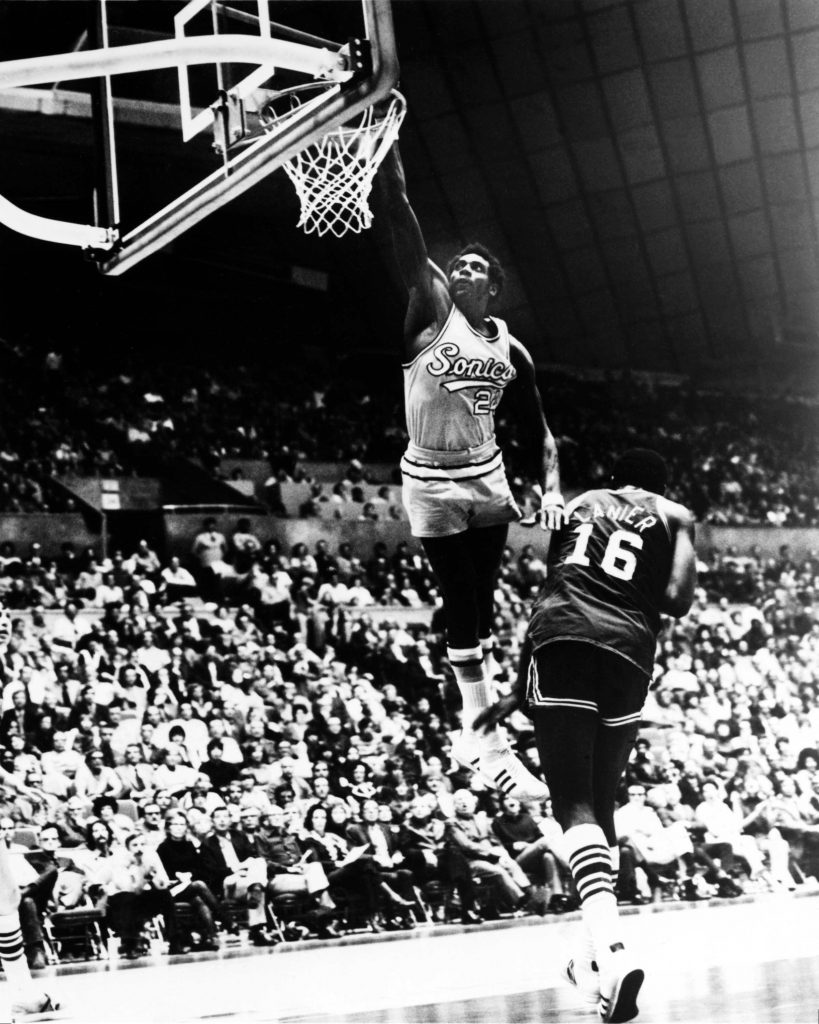
An unstoppable 6-foot-8 forward with
a unique skill set, Haywood led the U.S. team to the gold medal at the 1968
Olympics at the age of 19, and then averaged 32 points and 22 rebounds per game
in the 1968-69 season while playing for the University of Detroit. For Haywood,
the youngest of 10 children of a single mother worn down from a lifetime
working in the Mississippi cotton fields, college was a luxury he just couldn’t
afford.
Haywood went to the ABA, which
enacted a hardship exception in its bylaws that allowed its teams to sign
players who hadn’t completed their college eligibility. Hysteria ensued. The
end of civilization was near, so it was said, or at the very least the end of
college athletics. All censure, of course, was couched in terms of concern for
Haywood and other student-athletes.
The ABA proved to be no friend,
either. After Haywood won the 1969-70 ABA MVP Award as a rookie, the Denver
Rockets gave him a new contract worth $1.9 million. Or so they said.
“I signed it without legal counsel,”
Haywood says. “I got a raise from $50,000 to $75,000, and they would put
$10,000 a year into the stock market, and when I get to age 55, I start drawing
from that money if it’s there.
“And the agreement inside the
agreement said that I would have to be employed by the truck line that owned
the Rockets until I was 70 years old.”
Haywood hired an agent (Al Ross),
and when he and Ross tried to renegotiate a clearly unfair contract, the
Rockets’ owner told them to get out (peppered with a racial slur). Play for
Denver or don’t play at all because the NBA won’t touch you.
Enter Sam
Schulman, a lawyer and the outspoken managing partner of the Seattle SuperSonics.
NBA Commissioner J. Walter Kennedy warned Schulman to steer clear of Haywood.
But he couldn’t. Schulman wound up signing Haywood in December of 1970.
Copyright 2015 NBAE (Photo by Mike LeBrecht via Getty Images)
“Sam said, ‘I will give you the same contract you signed in Denver, but all in cash,’” Haywood says. “I got money, and I can play. I will do whatever Sam wants.”
The courts agreed. U.S. District
Judge Warren Ferguson issued a preliminary injunction allowing Haywood to play
for the Sonics. The NBA appealed to the U.S. Supreme Court, which upheld the
injunction in a 7-2 decision on March 1, 1971. Fewer than two weeks later,
Ferguson granted Haywood’s motion for a summary judgment declaring the NBA rule
invalid because it violated antitrust law.
As Schulman said later, “It was a
matter of principle. I couldn’t see any logical reason for keeping a man from
making a living.”
And the sky did not fall. In the
decades that followed, veteran players did not lose their jobs to younger,
cheaper players. The opposite occurred, as the influx of talent allowed the NBA
to expand. College basketball became bigger than ever. In the NBA, revenue
soared. All those extra years created tremendous wealth for NBA players and,
more importantly, gave them more control over their lives and careers. Haywood
v. NBA ended a system that benefited everyone but the players.
Copyright 2015 NBAE (Photo by David Dow/NBAE via Getty Images)
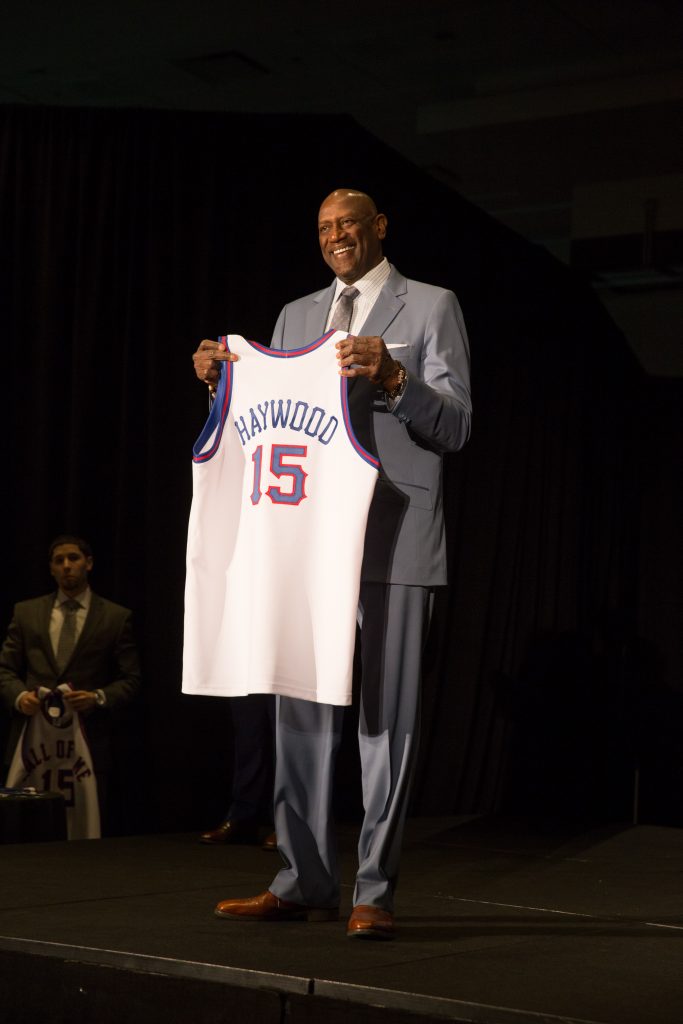
Haywood, who was inducted into the
Naismith Memorial Basketball Hall of Fame in 2015, is proud of his role as a
Pioneer. But as he said in his induction speech, “Now remember guys, I had
game. It’s not like I just did this Supreme Court thing. I had some serious
game.”